

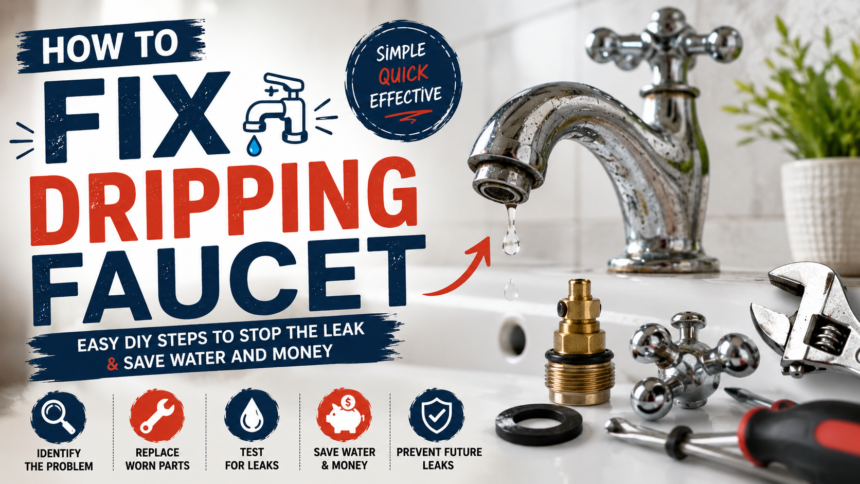
A dripping faucet may seem like a minor annoyance, but it can waste a surprising amount of water and increase your utility bills over time. The constant drip-drip-drip can also become frustrating, especially during quiet evenings or while trying to sleep.
- Why Does a Faucet Start Dripping?
- Why You Should Fix a Dripping Faucet Quickly
- Tools You May Need Before Starting
- Turn Off the Water Supply First
- Identify the Type of Faucet
- How to Fix Dripping Faucet in a Compression Faucet
- How to Fix Dripping Faucet in a Cartridge Faucet
- How to Fix Dripping Faucet in a Ball Faucet
- How to Fix Dripping Faucet in a Ceramic Disc Faucet
- Replacing a Worn Washer
- Fixing a Damaged O-Ring
- Repairing a Corroded Valve Seat
- How High Water Pressure Can Cause Dripping
- Common Mistakes People Make During Faucet Repairs
- Buying the Wrong Replacement Parts
- Overtightening Components
- Forgetting to Shut Off Water
- Losing Small Components
- When Repairs Don’t Stop the Dripping
- Repair vs. Replace: Which Option Is Better?
- Simple Maintenance Tips to Prevent Future Leaks
- The Long-Term Benefits of Fixing a Dripping Faucet
- Final Thoughts
The good news is that learning how to fix dripping faucet problems is often much easier than people expect. In many cases, the issue comes down to a worn-out part that can be replaced with basic tools and a little patience.
Whether the leak is coming from a kitchen sink, bathroom faucet, laundry room fixture, or outdoor tap, understanding how to fix dripping faucet issues can help you save money, conserve water, and avoid unnecessary plumbing expenses.
Why Does a Faucet Start Dripping?
Every faucet contains internal components that control water flow. Over time, these parts wear down due to constant use, pressure, and exposure to minerals in the water.
A faucet may start leaking because:
- Rubber washers have worn out.
- O-rings have become damaged.
- Cartridges are no longer sealing properly.
- Valve seats have corroded.
- Internal seals have deteriorated.
- Water pressure is too high.
Think of a faucet like a door that is opened and closed dozens of times every day. Eventually, the hinges and moving parts begin to wear down. The same thing happens inside a faucet.
As many plumbing professionals say, “A small drip is usually a warning sign, not the actual problem.”
Why You Should Fix a Dripping Faucet Quickly
Many homeowners ignore a small leak because it seems harmless.
Unfortunately, even a slow drip can waste a significant amount of water throughout the year.
A faucet dripping once every second can waste thousands of gallons annually. That wasted water translates into higher utility bills and unnecessary strain on local water resources.
Fixing the problem early can help:
- Reduce water waste
- Lower monthly bills
- Prevent larger plumbing issues
- Extend faucet lifespan
- Eliminate annoying dripping sounds
Learning how to fix dripping faucet problems early can save both time and money.
Tools You May Need Before Starting
Before beginning any repair, gather the necessary tools.
Having everything ready prevents interruptions during the repair process.
Common tools include:
- Adjustable wrench
- Phillips screwdriver
- Flathead screwdriver
- Allen wrench
- Replacement washers
- Replacement O-rings
- Replacement cartridge
- Needle-nose pliers
- Plumber’s grease
- Clean towel
- Small bowl for screws
Most faucet repairs require only a few inexpensive items.
Turn Off the Water Supply First
One of the most important steps in how to fix dripping faucet repairs is shutting off the water supply.
Look beneath the sink and locate the hot and cold water shut-off valves.
Turn both valves clockwise until they stop.
Next, open the faucet handles to release any remaining water pressure.
Place a towel in the sink and cover the drain opening to prevent small parts from disappearing down the drain.
Skipping this step can lead to a messy and frustrating repair experience.
Identify the Type of Faucet
Before taking anything apart, determine what type of faucet you have.
Different faucet designs require different repair methods.
Compression Faucets
Compression faucets have separate hot and cold handles.
These are among the oldest faucet designs and commonly leak because the washers wear out.
Cartridge Faucets
Cartridge faucets may have one or two handles.
They use a cartridge mechanism to control water flow and temperature.
Ball Faucets
Ball faucets are commonly found in kitchens.
They use a rotating ball assembly inside the faucet body.
Ceramic Disc Faucets
These modern faucets use ceramic discs to regulate water flow.
They are durable but can still develop leaks due to worn seals or mineral buildup.
Knowing the faucet type is a critical step when learning how to fix dripping faucet problems.
How to Fix Dripping Faucet in a Compression Faucet
Compression faucets are often the easiest type to repair.
Remove the Handle
Start by removing the decorative cap located on top of the faucet handle.
Use a screwdriver to remove the screw underneath.
Lift the handle off carefully.
Remove the Stem Assembly
Using an adjustable wrench, loosen and remove the stem assembly.
Set all parts aside in the order they were removed.
Inspect the Washer
At the bottom of the stem is a rubber washer.
This washer is often responsible for the dripping.
Look for:
- Cracks
- Flattening
- Hardening
- Tears
If any damage is visible, replace it.
Reassemble the Faucet
Install the new washer and put everything back together.
Turn the water supply on and test the faucet.
In many cases, replacing this small washer completely solves the problem.
How to Fix Dripping Faucet in a Cartridge Faucet
Cartridge faucets use an internal cartridge to control water flow.
When the cartridge wears out, leaks often develop.
Remove the Faucet Handle
Take off the decorative cap and remove the retaining screw.
Lift the handle carefully.
Access the Cartridge
Remove any retaining clips or nuts holding the cartridge in place.
Use pliers if necessary.
Replace the Cartridge
Pull out the old cartridge.
Take it with you when purchasing a replacement to ensure an exact match.
Install the new cartridge according to the manufacturer’s instructions.
Test the Repair
Reassemble the faucet and restore water flow.
Many cartridge-related leaks disappear immediately after replacement.
For homeowners researching how to fix dripping faucet issues, cartridge replacement is one of the most common solutions.
How to Fix Dripping Faucet in a Ball Faucet
Ball faucets contain more moving parts than other faucet types.
Because of this, they often require a repair kit.
Remove the Handle
Take off the faucet handle to expose the ball mechanism.
Inspect Internal Components
Look for:
- Worn springs
- Damaged seals
- Corrosion
- Mineral buildup
These parts frequently cause leaks.
Install New Components
Many hardware stores sell complete ball faucet repair kits.
Replacing all worn seals and springs at once often prevents future problems.
Reassemble Carefully
Follow the original assembly order.
A small mistake can affect water flow and create additional leaks.
How to Fix Dripping Faucet in a Ceramic Disc Faucet
Ceramic disc faucets are known for their durability.
However, they are not completely immune to leaks.
Remove the Handle
Take off the faucet handle and access the ceramic disc cylinder.
Check the Rubber Seals
Inspect the seals beneath the ceramic discs.
Even though the discs themselves rarely fail, the seals can wear out.
Clean Mineral Deposits
Hard water minerals may prevent proper sealing.
Soak affected parts in vinegar and gently clean them.
Replace Damaged Components
If seals appear worn, install new ones.
Reassemble the faucet and test for leaks.
Many ceramic disc faucet leaks can be fixed without replacing the entire faucet.
Replacing a Worn Washer
A worn washer remains one of the most common causes of faucet leaks.
Every time you close the faucet, the washer presses against a valve seat.
Years of use eventually flatten or crack the washer.
Signs of a worn washer include:
- Consistent dripping
- Squeaking handles
- Difficulty shutting off water completely
Replacing a washer is inexpensive and often solves the issue immediately.
Fixing a Damaged O-Ring
Sometimes water leaks around the handle instead of dripping from the spout.
This usually indicates a damaged O-ring.
An O-ring is a small rubber ring designed to create a watertight seal.
Over time it may:
- Dry out
- Crack
- Stretch
- Wear down
Replacing an O-ring is usually a quick repair that takes less than 20 minutes.
A small part can make a huge difference in stopping leaks.
Repairing a Corroded Valve Seat
The valve seat connects the faucet body to the spout.
Mineral deposits and corrosion can gradually damage this area.
When the valve seat becomes rough or uneven, water may slip through and create a drip.
Symptoms include:
- Persistent leaks
- Visible corrosion
- Reduced water flow
- Uneven water pressure
Cleaning or replacing the valve seat often restores proper operation.
How High Water Pressure Can Cause Dripping
Most people focus only on worn parts when researching how to fix dripping faucet problems.
However, excessive water pressure can also be responsible.
When water pressure is too high, it forces water through seals even when the faucet is fully closed.
Signs of high pressure include:
- Banging pipes
- Sudden bursts of water
- Multiple leaking fixtures
- Frequent plumbing issues
Installing a pressure regulator may help protect your entire plumbing system.
Common Mistakes People Make During Faucet Repairs
DIY faucet repairs are usually straightforward, but mistakes can happen.
Some of the most common include:
Buying the Wrong Replacement Parts
Not all cartridges, washers, and O-rings are identical.
Always compare old parts before purchasing replacements.
Overtightening Components
Many homeowners assume tighter is better.
In reality, overtightening can damage seals and create new leaks.
Forgetting to Shut Off Water
This mistake often results in water spraying throughout the workspace.
Always shut off the water first.
Losing Small Components
Place screws and small parts in a container during disassembly.
This simple habit prevents frustration later.
When Repairs Don’t Stop the Dripping
Sometimes a faucet continues leaking despite replacing the obvious parts.
Possible reasons include:
- Hidden internal damage
- Cracked faucet body
- Incorrect assembly
- Faulty replacement parts
- Severe corrosion
When troubleshooting becomes difficult, carefully review each repair step.
Sometimes the smallest overlooked component is causing the problem.
As experienced plumbers often say, “The leak you can see is not always where the problem starts.”
Repair vs. Replace: Which Option Is Better?
There comes a point when replacing a faucet makes more sense than repairing it.
Consider replacement if:
- The faucet is over 10 years old.
- Corrosion is extensive.
- Replacement parts are difficult to find.
- Multiple repairs have failed.
- The faucet body is cracked.
A modern replacement faucet may improve efficiency and reduce future maintenance needs.
Simple Maintenance Tips to Prevent Future Leaks
After learning how to fix dripping faucet problems, prevention becomes much easier.
Follow these maintenance tips:
- Clean faucets regularly.
- Remove mineral buildup promptly.
- Avoid forcing handles shut.
- Replace worn seals early.
- Monitor water pressure levels.
- Inspect fixtures annually.
Regular maintenance can add years to the life of a faucet.
Small preventative actions today often prevent expensive repairs tomorrow.
The Long-Term Benefits of Fixing a Dripping Faucet
Many people underestimate how much value comes from repairing a simple leak.
Benefits include:
- Lower water bills
- Less water waste
- Better plumbing performance
- Increased fixture lifespan
- Improved household efficiency
- Reduced risk of water damage
A repaired faucet also provides peace of mind.
There is something satisfying about turning off a faucet and hearing complete silence instead of an endless drip.
Final Thoughts
Learning how to fix dripping faucet issues is one of the most practical skills a homeowner can develop. Most faucet leaks are caused by worn washers, damaged O-rings, faulty cartridges, or minor internal wear that can often be repaired without professional assistance.
By identifying the faucet type, using the correct replacement parts, and following a careful repair process, you can stop leaks, reduce water waste, and extend the life of your plumbing fixtures. Whether the problem is small or persistent, addressing it early is always the smartest approach.
A dripping faucet may seem insignificant today, but fixing it promptly can save water, lower bills, and prevent larger plumbing headaches in the future.
Also Read: The Seattle Weekly