

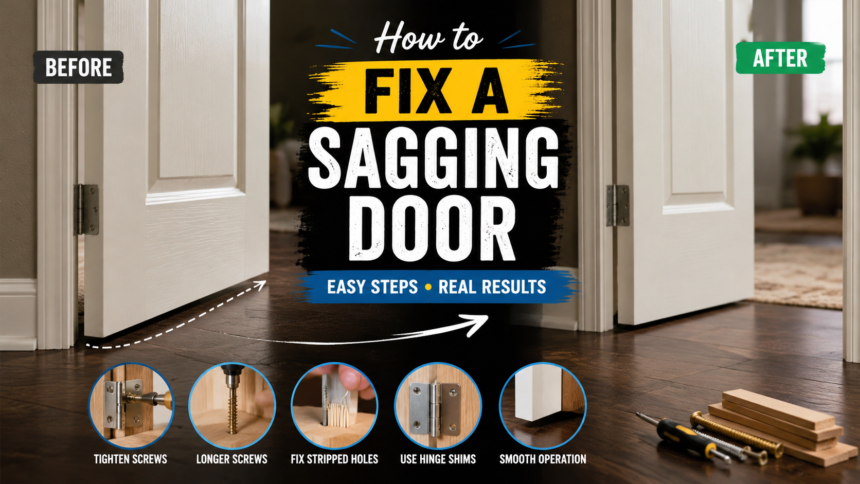
A door that drags across the floor, sticks when closing, or refuses to latch properly can quickly become annoying. The good news is that learning how to fix a sagging door is usually much easier than most homeowners expect.
- What Is a Sagging Door?
- Why Do Doors Sag?
- Loose Hinge Screws
- Stripped Screw Holes
- Heavy Solid Wood Doors
- House Settling
- Worn or Bent Hinges
- Humidity and Moisture
- Signs That Your Door Is Sagging
- Tools You Will Need
- How to Fix a Sagging Door by Tightening Loose Hinge Screws
- How to Fix a Sagging Door Using Longer Screws
- How to Fix a Sagging Door with Stripped Screw Holes
- How to Fix a Sagging Door by Adjusting the Top Hinge
- How to Fix a Sagging Door by Replacing Worn Hinges
- How to Fix a Sagging Door Using Hinge Shims
- How to Fix a Sagging Door by Checking the Door Frame
- How to Fix a Sagging Door Caused by a Warped Door Frame
- How to Fix a Sagging Door That Rubs Against the Floor
- Interior vs Exterior Sagging Doors
- Hollow-Core vs Solid Wood Doors
- Common Mistakes to Avoid
- Ignoring the Top Hinge
- Using Oversized Screws
- Sanding Too Soon
- Skipping Frame Inspection
- Over-Tightening Screws
- Seasonal Weather Effects on Doors
- Professional Repair Costs
- Simple Maintenance Checklist
- Troubleshooting Guide
- When to Call a Professional
- Final Thoughts
In many cases, a sagging door can be repaired in less than an hour using basic tools that are already sitting in your toolbox. Whether the problem is caused by loose hinges, worn screws, a shifting frame, or the natural settling of your home, there is almost always a practical solution.
Many people assume they need to replace the entire door when it starts sagging. In reality, most sagging doors only need a few adjustments to return to normal. As experienced carpenters often say, “A door rarely fails on its own—the support system behind it usually does.”
This guide covers everything you need to know about how to fix a sagging door, including the causes, repair methods, common mistakes, and preventive maintenance tips.
What Is a Sagging Door?
A sagging door is a door that has shifted downward from its original position. Instead of sitting evenly within the frame, one side drops lower than the other.
The most common sign is that the handle side of the door appears lower than the hinge side.
You may notice:
- The door scrapes the floor.
- The latch doesn’t line up correctly.
- Gaps around the frame look uneven.
- The door sticks when opening or closing.
- Paint or flooring becomes damaged from rubbing.
Think of it like a bookshelf with one loose support bracket. Everything may look fine at first, but eventually the weight causes one side to drop.
Why Do Doors Sag?
Understanding the cause is the first step in learning how to fix a sagging door correctly.
Loose Hinge Screws
This is the most common reason for a sagging door.
Every time a door opens and closes, pressure is placed on the hinges. After years of use, screws can loosen and lose their grip.
Even a small amount of movement can cause noticeable sagging.
Stripped Screw Holes
Sometimes the screws appear tight but are actually spinning inside enlarged holes.
When the wood around the screw becomes damaged, the hinge can no longer support the door properly.
Heavy Solid Wood Doors
Solid wood doors are significantly heavier than hollow-core doors.
The additional weight puts constant pressure on hinges and mounting screws.
House Settling
Homes naturally settle over time.
Even small structural shifts can change the alignment of door frames and cause sagging.
Worn or Bent Hinges
Hinges experience thousands of movements throughout their lifespan.
Eventually, hinge pins can wear down or hinge plates can bend.
Humidity and Moisture
Wood expands when humidity levels rise and contracts when conditions become dry.
Over time, these changes can affect door alignment.
Signs That Your Door Is Sagging
Before attempting repairs, confirm that sagging is actually the problem.
Common warning signs include:
- The top corner near the latch rubs against the frame.
- The bottom edge drags on the floor.
- The latch misses the strike plate.
- You need extra force to close the door.
- Visible uneven gaps surround the door.
A properly installed door should have consistent spacing on all sides.
Tools You Will Need
Most repairs require only basic household tools.
Essential Tools
- Phillips screwdriver
- Power drill
- Hammer
- Wood glue
- Wooden toothpicks
- Measuring tape
- Level
- Sandpaper
- Utility knife
- Replacement screws
Having these tools ready makes the repair process much smoother.
How to Fix a Sagging Door by Tightening Loose Hinge Screws
When researching how to fix a sagging door, this should always be your first step.
Open the door fully and inspect every hinge screw.
Use a screwdriver instead of a drill whenever possible because it allows better control.
Tighten each screw carefully.
Pay special attention to the top hinge because it carries much of the door’s weight.
Why This Works
Loose screws allow the hinge to move slightly every time the door opens.
Tightening them restores stability and often fixes the problem immediately.
Many homeowners are surprised to discover that five minutes of work solves months of frustration.
How to Fix a Sagging Door Using Longer Screws
Sometimes screws are tight but still fail to support the door.
In this case, replace one of the top hinge screws with a 3-inch wood screw.
The longer screw extends through the frame and into the wall stud behind it.
Benefits of Longer Screws
- Stronger support
- Better weight distribution
- Improved alignment
- Long-term durability
Professional contractors frequently use this method because it delivers excellent results with minimal effort.
How to Fix a Sagging Door with Stripped Screw Holes
Stripped holes are another common cause of sagging.
When screws lose their grip, the hinge becomes unstable.
The Toothpick Repair Method
- Remove the screw.
- Add wood glue inside the hole.
- Insert several wooden toothpicks.
- Break them flush with the surface.
- Allow the glue to dry.
- Reinstall the screw.
This simple trick creates new material for the screw to grip.
The Wooden Dowel Method
For larger damaged holes:
- Drill out the damaged area.
- Insert a glued wooden dowel.
- Allow it to dry completely.
- Drill a pilot hole.
- Reinstall the screw.
This method creates an extremely strong repair
How to Fix a Sagging Door by Adjusting the Top Hinge
The top hinge is often the key to understanding how to fix a sagging door.
If the handle side of the door has dropped, tightening the top hinge can pull the door back into alignment.
Replace one or two screws with longer screws.
Tighten them gradually while checking the door position.
Even a small adjustment can produce a noticeable improvement.
How to Fix a Sagging Door by Replacing Worn Hinges
Sometimes hinges simply wear out.
Inspect each hinge carefully.
Look for:
- Bent plates
- Loose hinge pins
- Cracks
- Excessive wear
If damage is visible, replacing the hinge is usually the best option.
New hinges are inexpensive and can dramatically improve door performance.
How to Fix a Sagging Door Using Hinge Shims
Shims are thin spacers placed behind hinges.
They help adjust the door’s position within the frame.
When to Use Shims
- Uneven gaps around the door
- Minor alignment issues
- Latch problems
- Slight rubbing against the frame
Cardboard, plastic, or commercial shims can all work effectively.
A tiny adjustment often produces surprisingly large results.
How to Fix a Sagging Door by Checking the Door Frame
Many homeowners focus entirely on the door and overlook the frame.
If the frame has shifted, even perfect hinges may not solve the problem.
Inspect the frame for:
- Cracks
- Separation from the wall
- Warping
- Water damage
Structural issues may require additional repairs before the door can be aligned properly.
How to Fix a Sagging Door Caused by a Warped Door Frame
Older homes occasionally develop warped frames.
A warped frame pushes against the door and creates alignment problems.
Signs of a Warped Frame
- Uneven gaps
- Difficulty latching
- Visible twisting
- Persistent sticking
Minor warping can sometimes be corrected using shims.
Severe cases may require professional repairs.
How to Fix a Sagging Door That Rubs Against the Floor
If the door still rubs slightly after repairs, sanding may help.
However, sanding should be the final adjustment—not the first solution.
Many people immediately start removing wood without addressing the actual cause of the sagging.
That approach often creates bigger problems later.
How to Sand Properly
- Mark rubbing areas with a pencil.
- Remove small amounts at a time.
- Test the fit frequently.
- Sand evenly.
Patience is important here.
Removing too much material can leave visible gaps.
Interior vs Exterior Sagging Doors
The repair process varies slightly depending on the door type.
Interior Doors
Interior doors are usually lighter.
Common causes include:
- Loose screws
- Worn hinges
- Minor frame movement
These doors are generally easier to repair.
Exterior Doors
Exterior doors are heavier and exposed to weather.
Common causes include:
- Moisture damage
- Frame shifting
- Heavy door weight
- Seasonal expansion
Exterior door repairs may require additional reinforcement.
Hollow-Core vs Solid Wood Doors
Different door materials affect repair strategies.
Hollow-Core Doors
Advantages:
- Lightweight
- Less hinge stress
- Easier adjustments
Problems often involve hinges rather than structural issues.
Solid Wood Doors
Advantages:
- Durable
- Attractive appearance
Challenges:
- Heavy weight
- Greater hinge strain
- Increased likelihood of sagging
Understanding the door type helps determine the most effective repair.
Common Mistakes to Avoid
When learning how to fix a sagging door, avoiding mistakes is just as important as making repairs.
Ignoring the Top Hinge
Most sagging issues originate here.
Always inspect the top hinge first.
Using Oversized Screws
Extremely large screws can split wood.
Use appropriately sized hardware.
Sanding Too Soon
Fix the cause before removing material from the door.
Skipping Frame Inspection
The frame may be contributing to the problem.
Never assume the door itself is the only issue.
Over-Tightening Screws
Excessive force can strip screw holes and create new problems.
Seasonal Weather Effects on Doors
Weather plays a bigger role than many homeowners realize.
Summer Conditions
High humidity causes wood expansion.
Doors may swell and stick.
Winter Conditions
Dry air can shrink wood slightly.
Gaps may become more noticeable.
A door that works perfectly in winter may become problematic during humid months.
Regular maintenance helps minimize seasonal changes.
Professional Repair Costs
Most homeowners can successfully complete repairs themselves.
However, professional assistance may sometimes be necessary.
Average repair costs typically range from:
- Minor hinge adjustments: $50–$100
- Hinge replacement: $75–$150
- Frame repair: $150–$500
- Structural corrections: $500+
DIY repairs often save significant money while delivering excellent results.
Simple Maintenance Checklist
Preventing future sagging is easier than repairing it repeatedly.
Every 3–6 Months
- Check hinge screws.
- Inspect hinge pins.
- Lubricate moving parts.
- Look for frame movement.
- Examine gaps around the door.
Small maintenance tasks can extend the life of both the door and hardware.
Troubleshooting Guide
Door Scrapes the Floor
Possible causes:
- Loose hinges
- House settling
- Heavy door weight
Door Won’t Latch
Possible causes:
- Sagging alignment
- Shifted strike plate
- Frame movement
Door Sticks at the Top
Possible causes:
- Top hinge problems
- Humidity expansion
- Warped frame
Door Swings Open by Itself
Possible causes:
- Uneven frame installation
- House settling
- Hinge misalignment
When to Call a Professional
DIY methods solve most sagging door issues.
However, professional help may be necessary if:
- Multiple doors are affected.
- The frame is severely damaged.
- Foundation movement is suspected.
- Structural cracks are visible.
- Repairs repeatedly fail.
An expert can identify hidden structural issues that simple adjustments cannot address.
Final Thoughts
Learning how to fix a sagging door is a valuable home maintenance skill that can save both time and money. In most situations, the problem comes down to loose hinges, worn screws, damaged screw holes, or minor frame shifts.
Start with the simplest solution—tightening the hinges—and work through each repair method systematically. As the saying goes, “The simplest fix is often the correct one.” Many sagging doors can be restored to perfect operation with nothing more than a screwdriver and a few replacement screws.
By understanding the causes, following the proper repair steps, and performing routine maintenance, you can keep your doors operating smoothly for years to come. Whether you are dealing with a lightweight interior door or a heavy exterior entry door, the techniques in this guide provide a reliable roadmap for how to fix a sagging door effectively and confidently.
Also Read: The Seattle Weekly