

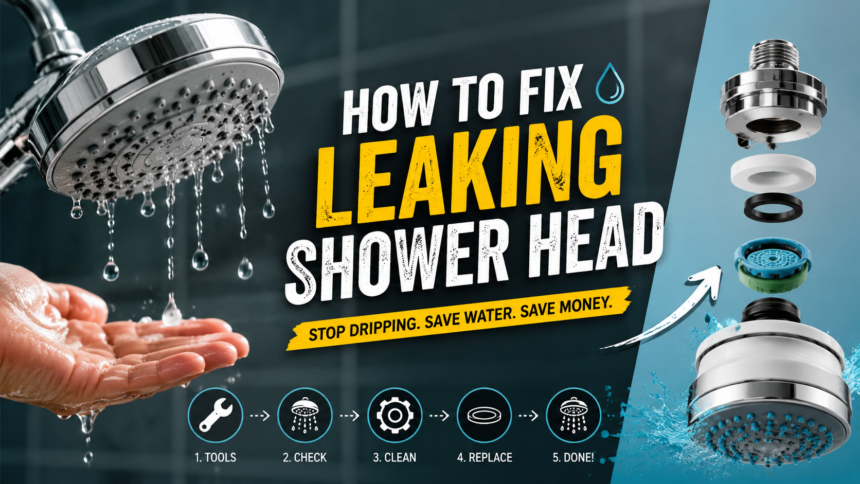
A leaking shower head may not seem like a serious problem at first, but even a slow drip can waste a surprising amount of water over time. Besides increasing your water bill, constant dripping can create unnecessary wear on your plumbing system and become a daily annoyance.
- Basic Tools
- Replacement Parts
- What to Do
- How to Clean the Shower Head
- Replacing a Washer
- Signs of a Damaged O-Ring
- Symptoms of a Faulty Cartridge
- Signs of High Water Pressure
- Leak From Spray Holes
- Leak Around Threads
- Leak Around Swivel Joint
- DIY Repairs Are Ideal For:
- Consider a Plumber If:
- Typical DIY Costs
- Average Repair Times
- Clean Regularly
- Inspect Components
- Monitor Water Pressure
- Tighten Loose Connections
- Replace Aging Parts Early
The good news is that most leaks can be fixed without hiring a plumber. Whether the issue is caused by mineral buildup, a worn-out washer, a faulty cartridge, or a loose connection, understanding how to fix leaking shower head problems can save both time and money.
This guide covers everything you need to know, from identifying the cause of the leak to performing common repairs and preventing future problems.
What Causes a Shower Head to Leak?
Before learning how to fix leaking shower head issues, you need to determine why the leak is happening.
A shower head usually leaks because water is still finding a path through the plumbing system after the shower has been turned off. This can happen for several reasons.
The most common causes include:
- Worn rubber washers
- Damaged O-rings
- Mineral deposits from hard water
- Loose shower head connections
- Faulty faucet cartridges
- Corroded plumbing parts
- Excessive water pressure
- Cracked shower heads
Identifying the root cause makes repairs much easier and prevents unnecessary part replacements.
Signs Your Shower Head Needs Repair
Many homeowners ignore a small drip because it seems harmless. However, small leaks often become larger problems over time.
Watch for these warning signs:
- Water dripping continuously after the shower is turned off
- Dripping sounds throughout the day or night
- Reduced shower pressure
- Uneven spray patterns
- Water escaping around fittings
- Visible mineral buildup
- Higher-than-normal water bills
If you notice any of these symptoms, it is time to investigate how to fix leaking shower head issues before the damage becomes more expensive.
Why You Should Fix a Leaking Shower Head Quickly
Some people put off repairs because the leak seems minor.
However, a shower head that drips every few seconds can waste hundreds or even thousands of gallons of water each year.
A simple leak can also:
- Increase utility costs
- Create unnecessary water waste
- Cause mineral buildup
- Reduce fixture lifespan
- Lead to additional plumbing issues
As many plumbers say, “A small leak today is often a bigger repair tomorrow.”
Tools You May Need
Most shower head repairs require only a few common household tools.
Basic Tools
- Adjustable wrench
- Screwdriver
- Plumber’s tape
- White vinegar
- Soft cloth
- Old toothbrush
- Needle-nose pliers
Replacement Parts
- Rubber washers
- O-rings
- Faucet cartridge
- Replacement shower head if necessary
Having these items ready will make the repair process faster and easier.
Step 1: Turn Off the Water Supply
Before beginning any repair, shut off the water supply.
If your shower has a local shut-off valve, use it. Otherwise, turn off the main water supply to the house.
Open the shower faucet briefly after shutting off the water. This releases any remaining pressure inside the pipes.
This simple step prevents unexpected water flow while you work.
Step 2: Inspect the Shower Head Connection
One of the easiest solutions for how to fix leaking shower head problems is checking the connection between the shower arm and the shower head.
Over time, movement and normal use can loosen threaded connections.
What to Do
- Unscrew the shower head.
- Examine the threads.
- Remove dirt or debris.
- Wrap fresh plumber’s tape around the threads.
- Reinstall the shower head securely.
Many leaks disappear immediately after this simple repair.
Step 3: Clean Mineral Deposits
Hard water contains minerals that build up inside shower heads.
Over months or years, calcium and lime deposits can block spray holes and interfere with proper sealing.
How to Clean the Shower Head
Fill a bowl with white vinegar.
Remove the shower head and soak it for several hours.
For heavy buildup, leave it overnight.
Use a toothbrush to scrub away remaining deposits.
Rinse thoroughly and reinstall.
Many homeowners are surprised to discover that cleaning alone solves their leaking problem.
Step 4: Replace the Shower Head Washer
Washers are among the most common causes of shower head leaks.
These small rubber components create a seal that prevents water from escaping.
Over time they can:
- Dry out
- Crack
- Flatten
- Lose flexibility
Replacing a Washer
Remove the shower head.
Locate the washer inside the threaded connection.
Take out the old washer carefully.
Install a matching replacement.
Reassemble the shower head and test it.
This inexpensive fix often solves persistent drippingStep 5: Check and Replace O-Rings
O-rings are circular rubber seals found inside many shower fixtures.
Their purpose is to keep water contained within the plumbing system.
A damaged O-ring allows water to escape through small openings.
Signs of a Damaged O-Ring
- Water around fittings
- Drips near the shower arm
- Moisture behind decorative covers
- Visible cracks in rubber seals
Replacing an O-ring usually takes only a few minutes and costs very little.
Whenever researching how to fix leaking shower head problems, checking O-rings should be near the top of your checklist.
Step 6: Examine the Faucet Cartridge
If replacing washers and O-rings doesn’t stop the leak, the issue may be inside the faucet itself.
The cartridge controls water flow and temperature.
When it wears out, water may continue flowing to the shower head even when the handle is turned off.
Symptoms of a Faulty Cartridge
- Continuous dripping
- Difficulty turning the handle
- Water temperature fluctuations
- Reduced control over flow
Replacing the cartridge is slightly more advanced but still manageable for many homeowners.
How to Replace a Faulty Cartridge
Start by removing the faucet handle.
Some handles have decorative caps hiding the mounting screws.
Once removed, locate the cartridge retaining clip or nut.
Carefully remove the old cartridge.
Install a new cartridge that matches the manufacturer’s specifications.
Reassemble the faucet and restore water flow.
Test the shower to see whether the leak has stopped.
A new cartridge often completely resolves stubborn leaks.
Step 7: Check Water Pressure
Many homeowners overlook water pressure when learning how to fix leaking shower head issues.
Excessive pressure places extra stress on plumbing fixtures.
This can force water through seals that would otherwise function normally.
Signs of High Water Pressure
- Loud pipe noises
- Strong water flow
- Frequent leaks throughout the house
- Shortened fixture lifespan
Most residential plumbing systems work best between 40 and 60 PSI.
If pressure exceeds recommended levels, installing a pressure regulator may be necessary.
Step 8: Inspect the Shower Head for Cracks
Plastic shower heads can develop cracks over time.
Even tiny fractures can allow water to escape continuously.
Carefully inspect:
- The faceplate
- Threaded connection
- Body of the shower head
- Pivot joints
If a crack is present, replacement is usually the best solution.
Temporary repairs often fail after a short period.
Different Types of Shower Head Leaks
Not every leak looks the same.
Understanding where the water is escaping can help identify the problem more quickly.
Leak From Spray Holes
Usually caused by:
- Faulty cartridge
- Worn valve seat
- Internal pressure issues
Leak Around Threads
Often caused by:
- Loose connection
- Damaged washer
- Missing plumber’s tape
Leak Around Swivel Joint
Common causes include:
- Worn O-rings
- Damaged seals
- Corrosion
Identifying the leak location significantly speeds up the repair process.
DIY Repair vs Hiring a Plumber
Most homeowners can successfully handle basic shower head repairs.
DIY Repairs Are Ideal For:
- Replacing washers
- Cleaning mineral buildup
- Tightening connections
- Replacing O-rings
- Installing a new shower head
Consider a Plumber If:
- Leaks continue after repairs
- Plumbing inside walls may be leaking
- The valve body is damaged
- Corrosion is severe
- You are uncomfortable disassembling fixtures
Professional assistance may save time when dealing with complex plumbing issues.
How Much Does It Cost to Fix a Leaking Shower Head?
One reason many people search for how to fix leaking shower head problems is to avoid expensive service calls.
Fortunately, most repairs are affordable.
Typical DIY Costs
| Repair | Estimated Cost |
|---|---|
| Plumber’s tape | $2–$5 |
| Washer replacement | $1–$5 |
| O-ring replacement | $2–$10 |
| Vinegar cleaning | $2–$5 |
| Cartridge replacement | $15–$60 |
| New shower head | $20–$150+ |
Compared to ongoing water waste, these repairs are usually well worth the investment.
Can a Leaking Shower Head Increase Your Water Bill?
Absolutely.
Many homeowners underestimate how much water a slow drip can waste.
A single drip every second can add up significantly over a year.
The result may include:
- Higher water bills
- Increased energy costs for heated water
- Additional strain on plumbing components
Fixing leaks quickly is one of the simplest ways to reduce household water waste.
How Long Does It Take to Fix a Leaking Shower Head?
Most repairs are surprisingly fast.
Average Repair Times
- Tightening connections: 5–10 minutes
- Cleaning mineral buildup: 30 minutes to overnight soaking
- Replacing washers: 10–20 minutes
- Replacing O-rings: 10–20 minutes
- Installing a new cartridge: 30–60 minutes
Even homeowners with limited experience can often complete repairs within an hour.
Best Maintenance Tips to Prevent Future Leaks
Preventive maintenance is much easier than emergency repairs.
Clean Regularly
Remove mineral buildup every few months using vinegar.
Inspect Components
Check washers and seals periodically.
Monitor Water Pressure
Avoid excessive pressure that stresses fixtures.
Tighten Loose Connections
Small movements over time can loosen threaded fittings.
Replace Aging Parts Early
Waiting for complete failure often leads to larger repairs.
Regular maintenance extends the lifespan of your shower system and reduces future problems.
Should You Replace the Entire Shower Head?
Sometimes replacement is the most practical option.
Consider installing a new shower head if:
- The fixture is more than ten years old.
- Multiple components have failed.
- Cracks are present.
- Corrosion is severe.
- Water flow remains poor after cleaning.
Modern shower heads often provide better efficiency, stronger spray performance, and reduced water consumption.
In some situations, replacing the unit is easier than repeatedly troubleshooting how to fix leaking shower head problems.
Final Thoughts
Learning how to fix leaking shower head issues can save money, reduce water waste, and improve your overall shower experience. Most leaks are caused by simple problems such as worn washers, damaged O-rings, mineral buildup, loose connections, or faulty cartridges.
The key is identifying the source of the leak before replacing parts unnecessarily. In many cases, a repair that costs only a few dollars can stop months of water waste and frustration.
Whether you’re tightening a connection, cleaning hard-water deposits, replacing a seal, or installing a new cartridge, taking action quickly helps protect both your plumbing system and your wallet. A leaking shower head may be a small problem, but fixing it promptly delivers long-term benefits.
Also Read: The Seattle Weekly