
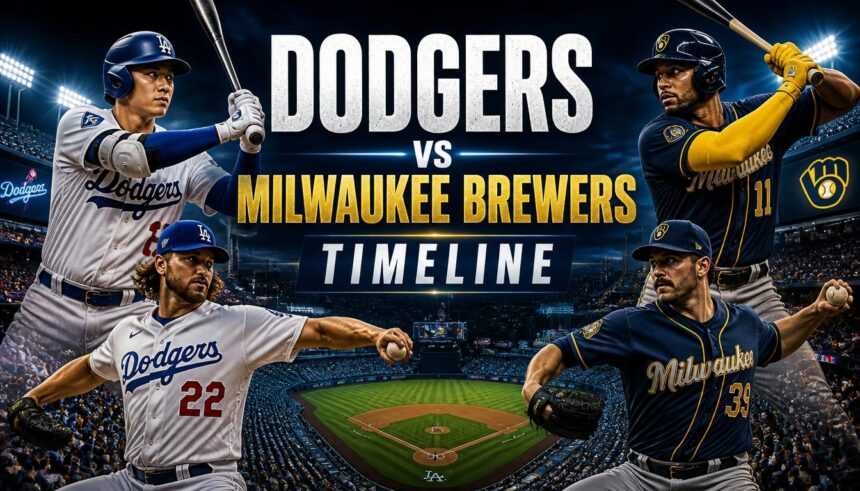
Baseball fans have enjoyed many memorable matchups over the years, and the dodgers vs milwaukee brewers timeline is one of the most interesting stories in modern Major League Baseball. While the Los Angeles Dodgers and Milwaukee Brewers are not traditional rivals like the Yankees and Red Sox, their games have produced unforgettable moments, dramatic playoff battles, and outstanding individual performances.
The dodgers vs milwaukee brewers timeline has grown more exciting in recent years because both teams have frequently competed for National League dominance. Every series between these clubs feels meaningful, whether it happens during the regular season or in the postseason.
As one baseball analyst once said, “Great rivalries are not built by geography alone—they are created through memorable games and high-stakes moments.” The history between the Dodgers and Brewers perfectly fits that description.
Early Years of the Matchup
The Brewers joined the National League in 1998 after spending years in the American League. This change allowed them to play the Dodgers more frequently.
In the early seasons, the Dodgers generally had the upper hand because they possessed stronger rosters and more playoff experience. However, Milwaukee steadily improved and became a competitive opponent.
The first years of the dodgers vs milwaukee brewers timeline were mostly regular-season meetings without much national attention. Still, they laid the foundation for the intense games that would come later.
Key Features of the Early Years
- Mostly regular-season contests
- Dodgers often held winning records
- Brewers focused on rebuilding their roster
- Few postseason implications
Although these games were not headline events, they gradually created familiarity between the two clubs.
The Rise of Competitive Games (2008–2017)
The rivalry became more noticeable as the Brewers emerged as a playoff-caliber team. Milwaukee began developing stars who could challenge the Dodgers consistently.
The Dodgers also entered one of the strongest periods in franchise history, building teams filled with talent and postseason aspirations.
The dodgers vs milwaukee brewers timeline during this period featured many close games, walk-off victories, and pitching duels that attracted larger audiences.
Notable Players During This Era
For the Dodgers:
- Clayton Kershaw
- Adrian Gonzalez
- Justin Turner
For the Brewers:
- Ryan Braun
- Prince Fielder
- Jonathan Lucroy
These players helped transform ordinary regular-season games into highly competitive contests.
The 2018 NLCS: The Turning Point
The biggest chapter in the dodgers vs milwaukee brewers timeline arrived in 2018.
The Brewers and Dodgers met in the National League Championship Series (NLCS), with a trip to the World Series on the line. The stakes could not have been higher.
Milwaukee entered the series full of confidence after an excellent season. The Dodgers, meanwhile, had significant playoff experience and were determined to return to the World Series.
The series immediately became one of the best postseason matchups in recent memory.
Game Highlights
Game 1: Brewers won 6-5.
Game 2: Dodgers responded with a 4-3 victory.
Game 3: An 18-inning marathon ended with the Dodgers winning.
Game 4: Brewers evened the series.
Game 5: Dodgers took control.
Game 6: Los Angeles secured the NLCS and advanced to the World Series.
The series had everything:
- Extra innings
- Outstanding pitching
- Home runs
- Strategic managerial decisions
- Dramatic momentum shifts
Many fans still consider this chapter the defining moment in the dodgers vs milwaukee brewers timeline.
As one commentator remarked, “Every inning felt like a season within itself.”
Memorable Players in the 2018 NLCS
Several stars left a lasting impact on this series.
Dodgers Standouts
- Cody Bellinger
- Manny Machado
- Walker Buehler
- Yasiel Puig
Brewers Standouts
- Christian Yelich
- Lorenzo Cain
- Josh Hader
These players delivered performances that elevated the rivalry’s reputation throughout baseball.
Recent Years of the Rivalry
Since the famous 2018 postseason series, every meeting between the Dodgers and Brewers has attracted significant attention.
The Dodgers have continued to build championship-caliber rosters and remain one of baseball’s most successful organizations.
The Brewers have consistently been playoff contenders and have become known for excellent pitching and disciplined team play.
The modern dodgers vs milwaukee brewers timeline is defined by balance and competitiveness.
Why Fans Love These Matchups
- Strong pitching staffs
- Star power on both teams
- Frequent playoff implications
- Close, low-scoring games
- Unpredictable outcomes
Even regular-season contests often feel like postseason games.
Head-to-Head Style Comparison
The dodgers vs milwaukee brewers timeline is especially interesting because the teams approach baseball differently.
| Category | Dodgers | Brewers |
|---|---|---|
| Spending Power | Very High | Moderate |
| Offensive Depth | Excellent | Good |
| Pitching Development | Strong | Excellent |
| Star Power | Elite | Strong |
| Playoff Experience | Extensive | Growing |
The Dodgers often rely on deep lineups and superstar talent, while Milwaukee succeeds through pitching depth and smart roster construction.
This contrast makes their games highly entertaining.
Most Memorable Moments in the Timeline
1. Brewers Enter the National League (1998)
This change officially began the regular meetings between the franchises.
2. Brewers Become Contenders
Milwaukee’s rise created meaningful games with playoff implications.
3. 2018 NLCS Battle
The six-game series transformed the relationship between the teams.
4. Continued Competitive Series
Recent seasons have featured multiple close contests and dramatic finishes.
These moments define the modern dodgers vs milwaukee brewers timeline.
Why This Timeline Matters
Baseball rivalries often take decades to develop. The Dodgers and Brewers have built theirs through meaningful games and postseason pressure.
The dodgers vs milwaukee brewers timeline demonstrates how repeated competitive matchups can create genuine excitement even without geographic proximity.
Every season seems to add another memorable chapter.
Fans now expect:
- High-quality pitching
- Big moments from star players
- Playoff-level intensity
- Close finishes
That anticipation is what makes sports rivalries special.
Statistical Trends in the Rivalry
Throughout the timeline:
- The Dodgers have generally maintained the overall series advantage.
- Many games have been decided by small margins.
- Pitching has frequently dominated the matchup.
- Home-field advantage has not always guaranteed success.
The rivalry’s unpredictability is one reason fans continue following every series.
A baseball saying notes that “The best games are the ones where nobody knows the outcome until the final pitch.” The Dodgers and Brewers have repeatedly delivered exactly that experience.
The Future of the Rivalry
The future of the dodgers vs milwaukee brewers timeline looks bright.
Both franchises possess strong player development systems and remain committed to competing for championships.
As long as the Dodgers continue fielding elite rosters and the Brewers maintain their reputation for disciplined baseball and excellent pitching, this matchup will remain one of the National League’s most enjoyable battles.
Future playoff meetings could easily add new legendary moments to this growing timeline.
Fans from both sides eagerly await the next chapter because every series has the potential to become another classicFinal Thoughts
The dodgers vs milwaukee brewers timeline is a story of growth, competition, and unforgettable baseball moments. What began as ordinary regular-season meetings evolved into one of the National League’s most compelling modern matchups.
From Milwaukee joining the National League in 1998 to the unforgettable 2018 NLCS and the highly competitive games that continue today, the timeline proves that rivalries are built through meaningful moments and shared history.
For baseball fans, every Dodgers-Brewers series offers the possibility of another dramatic chapter, making this timeline one worth following for years to come.
Also Read: The Seattle Weekly