

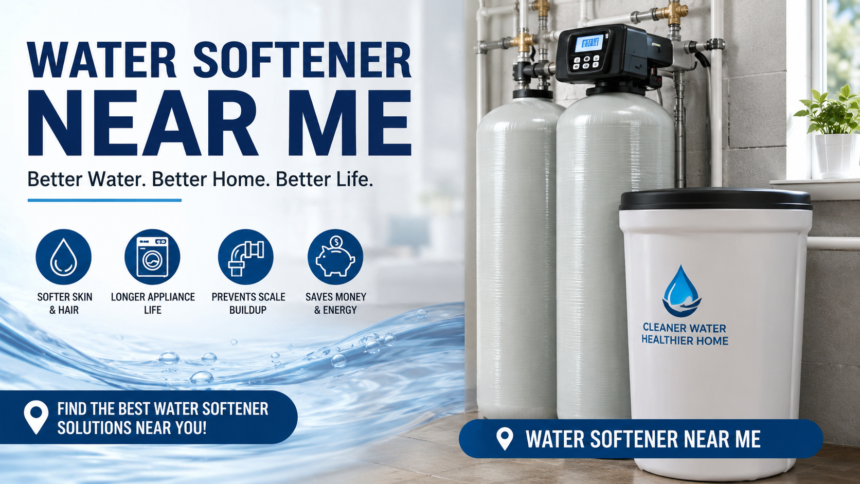
If you have ever noticed white spots on your dishes, chalky buildup on faucets, dry skin after a shower, or appliances that seem to wear out too quickly, hard water may be the reason. This is why thousands of homeowners search for water softener near me every month, looking for a practical solution to improve water quality and protect their homes.
- Understanding Hard Water
- 1. Longer Appliance Life
- 2. Lower Energy Bills
- 3. Cleaner Dishes and Glassware
- 4. Softer Skin and Healthier Hair
- 5. Easier Cleaning
- 6. Better Laundry Results
- Salt-Based Water Softeners
- Salt-Free Water Conditioners
- Dual-Tank Water Softeners
- Magnetic and Electronic Descalers
- Water Hardness Level
- Household Size
- Water Usage Habits
- Warranty Coverage
- Customer Reviews
- Step 1: Water Testing
- Step 2: System Recommendation
- Step 3: Plumbing Preparation
- Step 4: System Installation
- Step 5: Programming and Testing
- Check Salt Levels
- Clean the Brine Tank
- Inspect for Salt Bridges
- Schedule Annual Service
A water softener is one of the most valuable upgrades you can make if your home receives hard water. It helps reduce mineral buildup, improves cleaning performance, extends appliance lifespan, and makes everyday water use more comfortable.
In this detailed guide, you’ll learn everything about finding the best water softener near me, how water softeners work, their benefits, costs, installation process, maintenance requirements, and how to choose the right system for your needs.
Understanding Hard Water
Before choosing a water softener, it’s important to understand what hard water actually is.
Hard water contains high concentrations of dissolved minerals, mainly calcium and magnesium. These minerals are naturally picked up as water moves through underground rock formations before reaching homes.
While hard water is generally safe to drink, it can create several problems throughout your home.
Common signs of hard water include:
- White residue on sinks and faucets
- Soap scum in showers and bathtubs
- Dry skin after bathing
- Dull or rough laundry
- Cloudy drinking glasses
- Reduced water pressure
- Higher energy bills
- Frequent appliance repairs
Many homeowners don’t realize how much hard water affects daily life until they install a water softener and experience the difference firsthand.
As one homeowner described it, “I thought hard water was normal until I switched to softened water. The difference was noticeable within days.”
Why People Search for Water Softener Near Me
The demand for local water softener services continues to grow because water quality varies significantly from one region to another.
Local water treatment companies understand the specific water conditions in your area. They can test your water, recommend the appropriate equipment, and provide professional installation.
Searching for water softener near me offers several advantages:
- Faster installation services
- Local expertise
- Easier maintenance support
- Emergency repair availability
- Better understanding of regional water issues
- Personalized recommendations
Working with local professionals often leads to better long-term results than purchasing a generic system without proper testing.
How Does a Water Softener Work?
Most residential water softeners use a process called ion exchange.
The system contains resin beads that carry a sodium or potassium charge. As hard water flows through the unit, calcium and magnesium minerals are attracted to the resin and replaced with sodium or potassium ions.
The result is softened water that causes fewer household problems.
The process works continuously and automatically. Periodically, the system enters a regeneration cycle to clean the resin and restore its effectiveness.
Think of a water softener as a filter specifically designed to remove hardness minerals before they can damage your plumbing and appliances.
Major Benefits of Installing a Water Softener
The benefits of a quality water softener extend far beyond cleaner water.
1. Longer Appliance Life
Hard water minerals accumulate inside appliances over time.
Water heaters, dishwashers, washing machines, and coffee makers often experience reduced efficiency due to mineral buildup.
Softened water helps keep these systems cleaner and operating more efficiently.
Many manufacturers estimate that appliances exposed to soft water can last significantly longer than those exposed to hard water.
2. Lower Energy Bills
When minerals coat heating elements inside water heaters, the appliance must work harder to heat water.
Even a small layer of scale can reduce efficiency.
By preventing scale buildup, a water softener helps appliances operate with less energy consumption.
This can contribute to noticeable savings over the years.
3. Cleaner Dishes and Glassware
Hard water often leaves spots and streaks on dishes.
Many people find themselves re-washing glasses or using extra rinse aids to achieve a clean finish.
Soft water allows detergents to work more effectively, leaving dishes sparkling clear.
4. Softer Skin and Healthier Hair
One of the most commonly reported benefits of softened water is improved skin comfort.
Hard water minerals can interfere with soap rinsing properly, leaving residue behind.
Soft water allows soaps and shampoos to rinse more thoroughly.
Many users report:
- Less dryness
- Smoother skin
- Softer hair
- Reduced irritation
This benefit is especially appreciated by people with sensitive skin.
5. Easier Cleaning
Cleaning becomes much easier with softened water.
Soap scum and mineral deposits are reduced significantly, meaning less scrubbing is required in:
- Showers
- Bathtubs
- Sinks
- Faucets
- Glass doors
- Kitchen surfaces
Many homeowners spend less time cleaning after installing a water softener.
6. Better Laundry Results
Hard water minerals can become trapped in fabrics.
Over time, clothing may feel rough, lose color, or wear out faster.
Soft water helps detergents clean more effectively, resulting in:
- Softer towels
- Brighter colors
- Cleaner clothes
- Longer fabric life
Laundry often becomes noticeably fresher after switching to softened water.
Different Types of Water Softeners
Not every home requires the same solution.
Understanding your options can help you choose the best water softener near me.
Salt-Based Water Softeners
These are the most common and effective systems.
Benefits include:
- Excellent hardness removal
- Proven technology
- Reliable performance
- Suitable for severe hard water
These systems require regular salt refills.
Salt-Free Water Conditioners
These systems don’t remove minerals.
Instead, they alter mineral behavior to reduce scale formation.
Advantages include:
- Minimal maintenance
- No salt required
- Environmentally friendly
However, they may not be as effective in areas with very hard water.
Dual-Tank Water Softeners
Large households often choose dual-tank systems.
Benefits include:
- Continuous soft water supply
- Better efficiency
- Suitable for high water usage
These systems are generally more expensive but provide exceptional performance.
Magnetic and Electronic Descalers
These devices use magnetic or electronic fields to reduce scale buildup.
While affordable, results can vary significantly depending on water conditions.
Most professionals recommend traditional water softeners for reliable results.
How to Choose the Best Water Softener Near Me
Not all systems are created equal.
Here are important factors to consider before purchasing.
Water Hardness Level
Professional water testing is essential.
Different hardness levels require different system capacities.
A local provider can determine the exact hardness of your water.
Household Size
The number of people in your home affects water consumption.
Larger families typically require larger systems.
Choosing the correct size prevents performance issues.
Water Usage Habits
Consider:
- Number of bathrooms
- Laundry frequency
- Dishwasher use
- Outdoor water use
These factors influence system sizing.
Warranty Coverage
A strong warranty demonstrates manufacturer confidence.
Look for:
- Long-term tank warranties
- Parts coverage
- Labor protection
These features provide valuable peace of mind.
Customer Reviews
When searching for water softener near me, always read customer feedback.
Look for comments regarding:
- Installation quality
- Service responsiveness
- System reliability
- Overall satisfaction
Consistent positive reviews are a strong indicator of quality.
What Does a Water Softener Cost?
Cost depends on several factors.
Entry-Level Systems
- $500–$1,000
Suitable for smaller homes with moderate water hardness.
Mid-Range Systems
- $1,000–$2,500
Popular choice for average households.
Premium Systems
- $2,500–$5,000+
Advanced features and larger capacities.
Installation Costs
Installation may range from:
- $300–$1,500+
depending on plumbing complexity.
Although the initial investment can seem significant, many homeowners save money over time through:
- Reduced appliance repairs
- Lower energy consumption
- Less cleaning product usage
- Extended plumbing lifespan
The Water Softener Installation Process
Professional installation usually follows these steps.
Step 1: Water Testing
Technicians analyze your water quality.
They identify hardness levels and other potential issues.
Step 2: System Recommendation
Based on test results, the installer recommends the appropriate unit.
This ensures optimal performance.
Step 3: Plumbing Preparation
The installation area is prepared and existing plumbing connections are evaluated.
Step 4: System Installation
The water softener is connected to the home’s main water line.
Step 5: Programming and Testing
The system is configured according to household water usage.
Technicians then verify proper operation.
Most installations can be completed within a few hours.
Water Softener Maintenance Tips
Routine maintenance helps maximize system lifespan.
Check Salt Levels
Inspect the brine tank regularly and refill as needed.
Clean the Brine Tank
Periodic cleaning helps maintain efficient operation.
Inspect for Salt Bridges
Salt bridges can form over time and interfere with regeneration.
Breaking them up restores performance.
Schedule Annual Service
Professional inspections help identify small issues before they become costly repairs.
A properly maintained water softener can last 10–20 years or more.
Signs You Need a New Water Softener
Even the best systems eventually wear out.
Watch for:
- Hard water spots returning
- Increased soap usage
- Frequent repairs
- Reduced water pressure
- Higher utility bills
- Aging equipment
If these symptoms appear, searching for water softener near me may help you find an upgraded replacement.
Water Softener vs Water Filter
Many homeowners confuse these systems.
Water Softener
Removes calcium and magnesium that cause hardness.
Water Filter
Removes contaminants such as:
- Chlorine
- Sediment
- Chemicals
- Certain odors
Many homes benefit from having both systems working together.
As industry experts often say, “A filter improves what is in your water, while a softener improves how your water behaves.”
Common Mistakes to Avoid
When choosing a water softener near me, avoid these mistakes:
- Buying without water testing
- Choosing the cheapest option only
- Ignoring maintenance requirements
- Installing the wrong size system
- Overlooking warranty details
- Skipping professional installation
Avoiding these errors can save significant money and frustration.
Final Thoughts
Searching for water softener near me is often the first step toward solving hard water problems that affect your entire home. From cleaner dishes and softer laundry to lower energy bills and longer-lasting appliances, the benefits are substantial.
The best approach is to work with a trusted local professional who can test your water, recommend the correct system, and provide expert installation. While the upfront cost may vary, the long-term savings and convenience make a water softener one of the smartest home improvement investments available.
When your water works better, everything in your home works better too. That’s why so many homeowners continue searching for the best water softener near me and making the switch to softer, cleaner, and more efficient water.
Also Read: The Seattle Weekly