

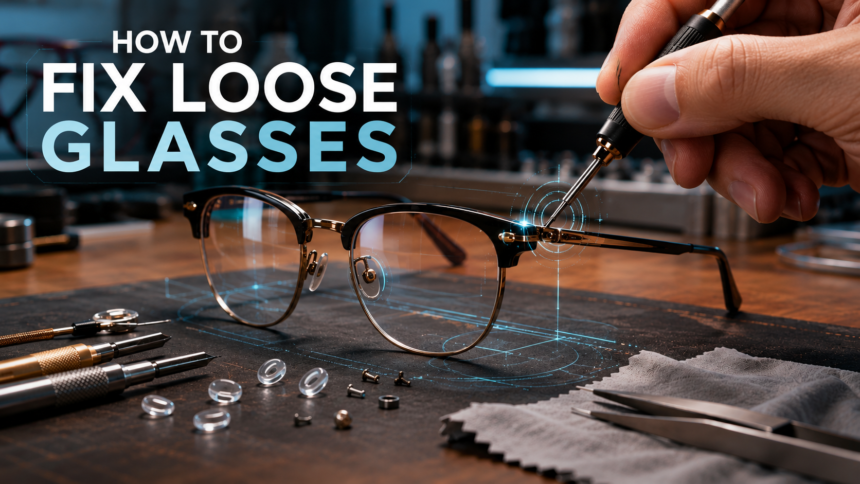
Loose glasses are one of those small daily problems that can quietly ruin your comfort. They slide down your nose while walking, slip when you bend forward, and constantly force you to push them back up again. Over time, this becomes distracting and even tiring for your eyes and face.
Understanding how to fix loose glasses is not just about repair—it’s about restoring comfort, clarity, and proper alignment of your vision. Even a slightly loose frame can affect how lenses sit in front of your eyes, leading to unnecessary strain.
The good news is that most loose glasses issues are fixable at home with simple, careful adjustments. You don’t always need an optician or expensive tools. You just need patience, light pressure, and the right method.
This guide explains everything in detail so you can confidently fix your glasses and keep them stable for long-term use.
Why Glasses Become Loose Over Time
To truly understand how to fix loose glasses, you first need to understand why they stop fitting properly. Glasses don’t usually become loose suddenly. It happens gradually due to everyday use.
One of the most common reasons is repeated handling. Every time you open and close the arms, small metal hinges experience stress. Over weeks and months, screws naturally loosen.
Another major factor is heat exposure. Leaving glasses in a hot car, near windows, or even in direct sunlight can slightly soften plastic frames. Once plastic becomes flexible, it slowly loses its original shape.
A simple truth many opticians agree on is:
“Glasses don’t fail at once—they slowly shift out of shape with everyday habits.”
Other causes include:
- Sleeping with glasses on
- Wearing them on top of the head frequently
- Dropping or placing them carelessly
- Natural aging of frame material
Even cleaning pressure matters. Pressing too hard while wiping lenses can twist the frame slightly over time.
Signs Your Glasses Are Loose
Before learning how to fix loose glasses, you should confirm the problem clearly. Loose glasses show specific signs that are easy to identify once you know what to look for.
Here are the most common indicators:
- Glasses slide down your nose frequently
- Frames feel uneven or tilted on your face
- Arms feel too open or wide
- You hear slight clicking or movement near hinges
- Glasses feel unstable when you look down
A quick test is simple: wear your glasses and gently shake your head. If they move noticeably, the fit is not secure.
Another sign is discomfort behind the ears. If your glasses are too loose, they don’t rest properly and shift pressure to the wrong areas.
Tools You Might Need for Fixing Loose Glasses
Most fixes in how to fix loose glasses require very simple tools. You probably already have most of them at home.
Useful items include:
- Small eyeglass screwdriver
- Soft cloth or microfiber cloth
- Warm water
- Hair dryer (low heat)
- Rubber bands
- Silicone nose pads (optional)
You don’t need a professional toolkit for basic adjustments. However, precision is important. Glasses are delicate, and too much force can damage them permanently.
How to Tighten Loose Screws on Glasses
One of the simplest and most effective methods in how to fix loose glasses is tightening screws. Loose screws are the most common cause of unstable frames.
Start by placing your glasses on a flat surface with good lighting. Carefully inspect both hinges.
Follow these steps:
- Locate the tiny screws on each hinge
- Use a precision screwdriver
- Turn clockwise slowly
- Check tightness after every small turn
- Ensure arms still move smoothly
Do not overtighten. If screws are too tight, the arms may stop folding properly or even crack.
A practical tip:
If screws keep coming loose repeatedly, apply a tiny drop of clear nail polish on the thread. This helps lock them gently without making them permanent.
Fixing Loose Temple Arms (Side Pieces)
Temple arms control how tightly your glasses sit on your head. If they are loose, your glasses will constantly slip forward.
This is one of the most important parts of how to fix loose glasses.
For metal frames:
- Hold the frame firmly
- Gently bend the arms inward
- Focus near the ear curve
- Make small adjustments only
For plastic frames:
- Use warm (not boiling) water to soften material
- Gently bend arms inward
- Hold shape until cool
Think of temple arms like the grip of your glasses. If the grip is weak, everything else becomes unstable.
A real-life example:
If your glasses fall forward every time you look down at your phone, tightening temple arms usually fixes it instantly.
Adjusting Nose Pads for Stability
Nose pads are one of the most overlooked parts of how to fix loose glasses, but they play a major role in comfort and balance.
If your glasses slide down your nose, the nose pads are likely too wide or uneven.
To adjust them:
- Push pads slightly closer for better grip
- Ensure both sides are equal
- Test balance after small adjustments
- Avoid pressing too hard at once
If your glasses don’t have adjustable nose pads (common in plastic frames), you can add silicone stick-on pads. These increase friction and prevent slipping.
One optician often explains it simply:
“Nose pads are the anchor point of your glasses—if they fail, everything moves.”
Fixing Loose Hinges for Better Frame Control
Loose hinges make glasses feel shaky and unreliable. This issue is very common in daily use and is a key part of how to fix loose glasses.
To fix hinges:
- Open glasses fully
- Tighten hinge screws carefully
- Test folding movement
- Repeat until stable but flexible
If hinges still feel loose, they may be worn out. In such cases, a temporary solution is applying a tiny amount of clear adhesive or nail polish on the screw threads.
However, this is not permanent and should be used carefully.
Quick Emergency Fixes Without Tools
Sometimes you need immediate solutions. These quick fixes in how to fix loose glasses are helpful when you’re outside or don’t have tools.
Try these:
- Wrap a small rubber band around temple arms for grip
- Use tissue or tape near hinges temporarily
- Add silicone ear hooks for better hold
- Slightly bend arms inward using gentle pressure
These methods are not permanent but work well for urgent situations like work, travel, or studying.
Preventing Glasses from Becoming Loose Again
Once you learn how to fix loose glasses, prevention becomes equally important. Proper care reduces how often you need adjustments.
Follow these habits:
- Always use both hands when wearing or removing glasses
- Store glasses in a protective case
- Avoid placing them lens-side down
- Keep away from heat sources
- Clean gently without bending frames
- Check screws every few weeks
Small habits protect frame structure for years.
As many opticians say:
“Good glasses care is about consistency, not effort.
When Professional Help Is Needed
Even though most issues in how to fix loose glasses can be handled at home, some cases require expert attention.
Visit an optician if:
- Frame is visibly bent or cracked
- Screws keep loosening repeatedly
- Hinges feel broken or misaligned
- Glasses cannot hold shape even after adjustments
Professionals use heat tools and precision equipment to restore exact frame alignment without damage.
Final Thoughts
Loose glasses may feel like a small inconvenience, but they affect your daily comfort more than you realize. Learning how to fix loose glasses gives you the ability to maintain your eyewear easily without waiting for repairs.
Most problems come down to simple issues—loose screws, weak hinges, or poorly adjusted arms. With a little patience, you can restore a perfect fit within minutes.
Good-fitting glasses should feel natural—stable but not tight, secure but not uncomfortable. Once adjusted properly, you should forget you’re even wearing them.
Taking a few minutes to maintain them regularly will save you from constant slipping and discomfort in the long run.
Also Read: The Seattle Weekly