

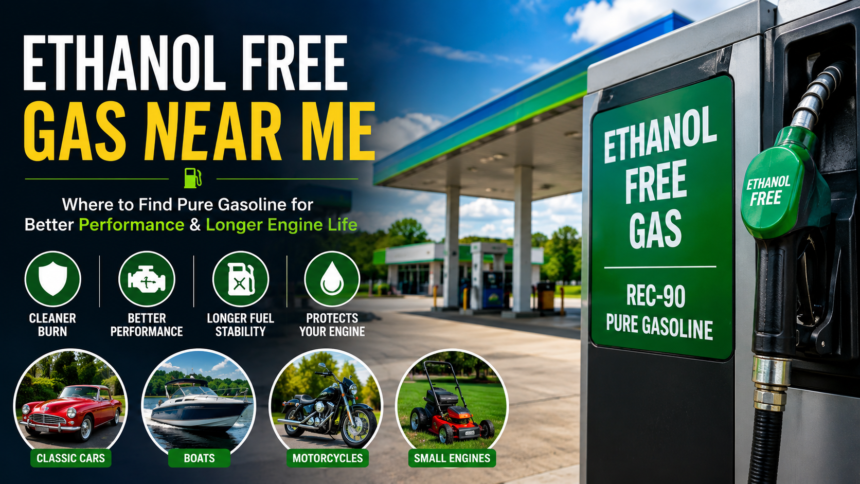
If you’ve recently searched for “ethanol free gas near me”, you’re probably trying to protect your vehicle, improve engine performance, or simply get better fuel quality. More drivers, boat owners, motorcycle riders, and small-engine users are switching to ethanol-free gasoline because it can help engines run smoother and last longer.
- What Is Ethanol-Free Gas?
- Why Many Drivers Prefer Ethanol-Free Gas
- Vehicles and Equipment That Benefit Most
- Does Ethanol-Free Gas Improve Mileage?
- Is Ethanol-Free Gas Better for Engine Health?
- Why Ethanol-Free Gas Costs More
- How to Find Ethanol-Free Gas Near You
- How to Identify Ethanol-Free Pumps
- Common Myths About Ethanol-Free Gas
- Is Ethanol-Free Gas Safe for Modern Cars?
- Best Situations to Use Ethanol-Free Gas
- Tips for Storing Ethanol-Free Gas Properly
- How Ethanol Affects Fuel Systems
- The Difference Between Premium Gas and Ethanol-Free Gas
- Are There Environmental Concerns?
- Real-World Example: Why Many Boat Owners Avoid Ethanol
- Signs Your Engine May Prefer Ethanol-Free Gas
- Should You Switch Completely?
- Final Thoughts
Unlike regular fuel blends that contain ethanol, ethanol-free gas is pure gasoline without alcohol additives. Many people notice cleaner performance, easier starts, and fewer maintenance problems after switching.
Whether you drive daily, store seasonal equipment, or own a classic car, finding reliable ethanol free gas near me locations can make a noticeable difference.
What Is Ethanol-Free Gas?
Ethanol-free gas is gasoline that does not contain ethanol or alcohol-based additives. Most standard gas stations sell E10 fuel, which contains around 10% ethanol.
Ethanol is added to fuel mainly for environmental and agricultural reasons, but it can also create problems in certain engines. That’s why many people search for ethanol free gas near me when they want cleaner-burning fuel.
Think of it like using filtered water instead of tap water in a coffee machine. Both work, but one may help the machine perform better over time.
Why Many Drivers Prefer Ethanol-Free Gas
Many vehicle owners believe ethanol-free fuel offers better engine protection and long-term reliability.
Here are some common reasons people choose it:
- Better fuel stability
- Improved engine performance
- Less moisture absorption
- Easier cold starts
- Reduced corrosion in older engines
- Longer shelf life for stored fuel
For vehicles that sit unused for weeks or months, ethanol-free gasoline can be especially useful.
One mechanic explained it simply: “Fuel should help your engine run, not slowly damage it while parked.”
Vehicles and Equipment That Benefit Most
Not every engine requires ethanol-free gas, but certain vehicles and machines benefit from it much more.
Classic Cars
Older engines were not designed for ethanol blends. Rubber seals, fuel lines, and carburetors may wear out faster when exposed to ethanol over time.
That’s why classic car owners often search for ethanol free gas near me before filling up.
Motorcycles
Motorcycles sometimes sit unused between rides. Ethanol-blended fuel can attract moisture and create fuel system issues during storage.
Ethanol-free gas helps reduce those risks.
Boats and Marine Engines
Water and ethanol do not mix well in marine environments. Boat owners commonly use ethanol-free gasoline because it lowers the chance of water contamination.
Lawn Equipment and Small Engines
Lawnmowers, chainsaws, generators, and leaf blowers often perform better with ethanol-free gas, especially after long storage periods.
Many small-engine repair shops recommend it regularly.
Does Ethanol-Free Gas Improve Mileage?
Some drivers report slightly better fuel economy when using ethanol-free gas because pure gasoline contains more energy than ethanol blends.
While the difference may not always be dramatic, it can still be noticeable over time.
For example:
- E10 fuel generally contains less energy per gallon
- Ethanol-free fuel may deliver more miles per tank
- Engines may feel smoother during acceleration
If you drive long distances frequently, searching for ethanol free gas near me could help improve overall driving efficiency.
Is Ethanol-Free Gas Better for Engine Health?
Many mechanics and automotive enthusiasts believe it is, especially for older or specialty engines.
Ethanol can absorb moisture from the air. Over time, that moisture may contribute to:
- Rust inside fuel systems
- Fuel separation
- Gummed-up carburetors
- Damaged seals and hoses
Ethanol-free gas helps reduce these risks.
This is one reason people with expensive recreational vehicles often prefer ethanol-free fuel despite the higher price.
Why Ethanol-Free Gas Costs More
One thing drivers quickly notice when searching for ethanol free gas near me is that it usually costs more than regular fuel.
There are a few reasons for that:
Limited Availability
Not every gas station sells ethanol-free gasoline. Lower supply often means higher pricing.
Specialty Demand
Boat owners, collectors, outdoor equipment users, and performance drivers all create demand for this type of fuel.
Refining and Distribution
Ethanol-free gasoline requires separate storage and transportation in many cases, which increases costs.
Still, many people believe the reduced maintenance expenses make it worth paying extra.
How to Find Ethanol-Free Gas Near You
Finding ethanol free gas near me has become easier in recent years.
Use Fuel Finder Apps
Several apps and websites help drivers locate ethanol-free gas stations nearby. These platforms often include:
- Station addresses
- Fuel types
- Customer reviews
- Updated pricing
Check Local Marinas
Marine fuel docks frequently offer ethanol-free gasoline because boats benefit heavily from it.
Visit Rural Gas Stations
In farming and outdoor recreation areas, ethanol-free fuel is more common because many people use small engines and recreational vehicles.
Ask Local Mechanics
Auto repair shops and motorcycle mechanics usually know which nearby stations carry ethanol-free gas.
Sometimes the best recommendations come from people working with engines every day.
How to Identify Ethanol-Free Pumps
Not every station advertises ethanol-free fuel clearly, so checking labels carefully matters.
Look for terms like:
- “Ethanol-Free”
- “Pure Gas”
- “No Ethanol”
- “Recreational Fuel”
- “REC-90”
Some stations place these pumps separately from standard gasoline options.
If you’re unsure, ask the station staff before fueling.
Common Myths About Ethanol-Free Gas
There are many misunderstandings surrounding ethanol-free fuel. Let’s clear up a few.
Myth 1: It Makes Every Car Faster
Ethanol-free gas may improve smoothness and efficiency slightly, but it will not magically turn a normal car into a race vehicle.
Myth 2: All Engines Need It
Most modern vehicles are designed to handle ethanol blends safely. Ethanol-free fuel is usually more important for older or specialty engines.
Myth 3: It Lasts Forever
Although ethanol-free gas stores better, fuel still degrades eventually. Proper storage is still important.
Is Ethanol-Free Gas Safe for Modern Cars?
Yes, in most cases it is completely safe.
Modern engines can usually run on ethanol-free gasoline without issues. In fact, some performance enthusiasts prefer it for premium driving experiences.
However, always check your owner’s manual for fuel recommendations.
If your manufacturer specifically recommends regular ethanol-blended fuel, follow those guidelines.
Best Situations to Use Ethanol-Free Gas
There are certain situations where ethanol-free gasoline makes the most sense.
Seasonal Storage
If your motorcycle, boat, or lawn equipment sits unused during winter, ethanol-free gas can help prevent fuel breakdown.
Emergency Generators
Generators often remain idle for long periods. Ethanol-free fuel stores more reliably for backup power equipment.
Collector Vehicles
Owners of vintage cars often choose ethanol-free gas to protect older fuel systems.
Long-Term Reliability
Drivers focused on reducing fuel system maintenance may prefer ethanol-free fuel regularly.
Searching for ethanol free gas near me is especially common among people who rely on engines that are expensive to repair.
Tips for Storing Ethanol-Free Gas Properly
Even though ethanol-free fuel is more stable, proper storage still matters.
Here are a few helpful tips:
- Use approved fuel containers
- Keep fuel sealed tightly
- Store in cool, dry places
- Avoid direct sunlight
- Rotate stored fuel periodically
Many outdoor equipment owners combine ethanol-free gas with fuel stabilizers for even better storage performance.
How Ethanol Affects Fuel Systems
Understanding why people search for ethanol free gas near me becomes easier when you understand ethanol’s effects.
Ethanol naturally attracts water from the atmosphere. Over time, this can lead to phase separation, where water and fuel split apart.
This may cause:
- Hard starts
- Rough idling
- Engine hesitation
- Corrosion
- Clogged fuel injectors
Not every engine experiences these problems immediately, but long-term exposure can increase risks.
The Difference Between Premium Gas and Ethanol-Free Gas
Many people confuse premium fuel with ethanol-free fuel, but they are not the same thing.
Premium Gas
Premium fuel mainly refers to higher octane ratings.
Ethanol-Free Gas
This refers to gasoline without ethanol content.
Some premium fuels still contain ethanol. Others do not.
Always check the pump labels instead of assuming premium automatically means ethanol-free.
Are There Environmental Concerns?
Ethanol was originally promoted partly because it can reduce certain emissions and support renewable fuel programs.
However, the discussion around ethanol remains debated among drivers and industry experts.
Some people prefer ethanol-free fuel for engine reliability, while others support ethanol blends for environmental reasons.
Both sides have valid points depending on fuel usage and engine type.
Real-World Example: Why Many Boat Owners Avoid Ethanol
Boat owners are among the biggest supporters of ethanol-free gasoline.
Imagine storing a boat for several months after summer ends. Ethanol-blended fuel may absorb moisture during storage, increasing the risk of fuel problems later.
That’s why marinas often stock ethanol-free fuel directly on-site.
One boating enthusiast described it well: “A cheaper tank of gas isn’t worth ruining an expensive engine.”
Signs Your Engine May Prefer Ethanol-Free Gas
You might benefit from switching if you notice:
- Frequent carburetor cleaning
- Rough engine starts after storage
- Fuel system corrosion
- Poor small-engine performance
- Fuel breakdown during winter storage
Many people only realize the difference after making the switch themselves.
Should You Switch Completely?
That depends on your vehicle and usage habits.
For everyday commuting in modern cars, regular fuel is usually acceptable.
But for:
- Boats
- Motorcycles
- Classic vehicles
- Generators
- Seasonal equipment
…ethanol-free fuel may offer meaningful long-term benefits.
If maintenance costs and engine protection matter to you, regularly searching for ethanol free gas near me can be worthwhile.
Final Thoughts
Finding reliable ethanol free gas near me is becoming more important for drivers who care about fuel quality, engine longevity, and storage reliability.
While it may cost slightly more, many people believe the smoother performance and reduced maintenance are worth the extra expense.
From motorcycles and boats to lawn equipment and classic cars, ethanol-free gasoline continues to grow in popularity because it solves real problems drivers experience every year.
As fuel choices expand, understanding what goes into your engine helps you make smarter decisions for performance, reliability, and long-term care.
Also Read: The Seattle Weekly