

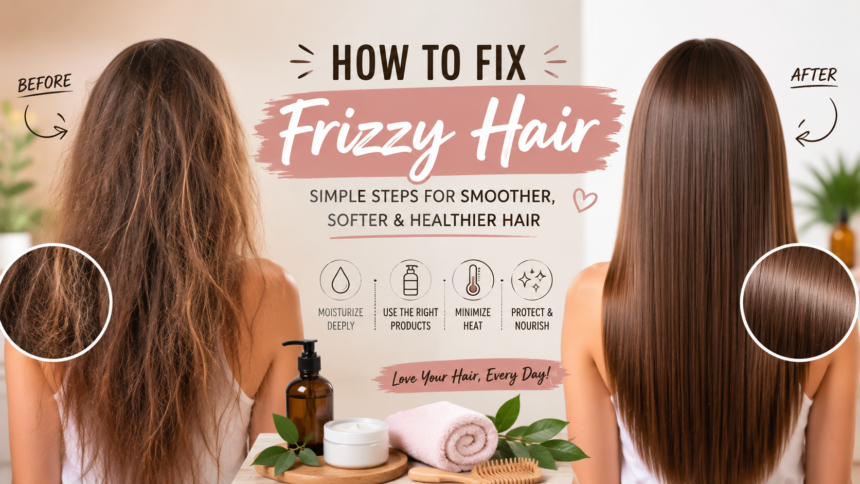
Frizzy hair can turn even a good hair day into a frustrating one. You spend time washing, conditioning, and styling your hair, only to step outside and watch it puff up, become unruly, or lose its shape within minutes. If you’ve ever looked in the mirror and wondered why your hair seems impossible to control, you’re not alone.
- What Is Frizzy Hair?
- Lack of Moisture
- Humidity
- Heat Damage
- Chemical Treatments
- Mechanical Damage
- Start With a Gentle Shampoo
- Never Skip Conditioner
- Uses a Deep Conditioning Mask Weekly
- Reduce How Often You Wash Your Hair
- Wash With Cooler Water
- Ditch the Rough Towel
- Let Hair Air-Dry When Possible
- Leave-In Conditioner
- Hair Oils
- Anti-Frizz Serums
- Heat Protectants
- Coconut Oil Treatment
- Aloe Vera Mask
- Honey Hair Mask
- Avocado Hair Treatment
The good news is that learning how to fix frizzy hair is not as complicated as many people think. Frizz is usually a sign that your hair is lacking moisture, has suffered some damage, or is reacting to environmental conditions such as humidity. Once you understand what causes frizz and how your hair responds to different products and habits, you can significantly improve its appearance and texture.
Many people spend hundreds of dollars on expensive treatments when the real solution often comes down to consistent hair care, proper hydration, and avoiding common mistakes. Whether your hair is straight, wavy, curly, or coily, this guide will help you understand how to fix frizzy hair and maintain smoother, healthier strands every day.
What Is Frizzy Hair?
Before understanding how to fix frizzy hair, it’s important to know what frizz actually is.
Hair strands are protected by an outer layer called the cuticle. When the cuticle lies flat, hair looks smooth, shiny, and healthy. When the cuticle becomes raised, moisture from the surrounding air enters the hair shaft, causing it to swell and appear frizzy.
Frizz is not necessarily a hair type. Instead, it is a condition that affects many hair types.
Some people experience mild flyaways around the crown of the head, while others struggle with full-head frizz that makes styling difficult.
Hair experts often say, “Frizz is not a problem to fight—it’s a signal that your hair needs something.” In most cases, that “something” is moisture, protection, or repair.
Why Does Hair Become Frizzy?
Understanding the causes of frizz is one of the most important steps in learning how to fix frizzy hair.
Several factors can contribute to frizz.
Lack of Moisture
Dry hair is one of the leading causes of frizz.
When hair lacks moisture internally, it searches for moisture from the surrounding environment. This often results in swelling and puffiness.
The drier the hair becomes, the more noticeable the frizz usually gets.
Humidity
Humidity is the enemy of smooth hair.
When moisture levels in the air increase, dry hair absorbs that moisture rapidly. The hair shaft expands, causing individual strands to lift and separate.
This is why your hair may look smooth indoors but become frizzy as soon as you step outside on a humid day.
Heat Damage
Flat irons, curling wands, and blow dryers can weaken the hair cuticle over time.
Repeated exposure to high temperatures removes moisture and damages the protective outer layer of the hair.
Once this damage occurs, hair becomes more prone to frizz.
Chemical Treatments
Hair coloring, bleaching, relaxing, and perming can alter the hair structure.
These treatments often weaken the cuticle and make it harder for the hair to retain moisture.
As a result, frizz becomes more noticeable.
Mechanical Damage
Simple daily habits can contribute to frizz.
Examples include:
- Brushing too aggressively
- Rubbing hair with a towel
- Using rough pillowcases
- Tight hairstyles that cause breakage
Even small amounts of daily friction can gradually increase frizz.
How to Fix Frizzy Hair: Step-by-Step Solutions
Now let’s focus on practical solutions for how to fix frizzy hair.
These methods work for most hair types and can produce noticeable improvements when followed consistently.
Start With a Gentle Shampoo
Many shampoos remove too much natural oil from the hair.
While clean hair feels refreshing, overly stripped hair often becomes dry and frizzy.
Choose shampoos designed for:
- Dry hair
- Damaged hair
- Frizz control
- Moisture retention
Look for ingredients such as:
- Argan oil
- Coconut oil
- Aloe vera
- Shea butter
- Glycerin
These ingredients help cleanse the hair without removing essential moisture.
A good shampoo should leave your hair feeling clean but not stripped.
Never Skip Conditioner
If you’re serious about learning how to fix frizzy hair, conditioner should become a non-negotiable part of your routine.
Conditioner smooths the hair cuticle and helps seal moisture into the hair shaft.
Apply conditioner mainly to:
- Mid-lengths
- Ends
Avoid applying large amounts directly to the scalp unless the product specifically recommends it.
Leave conditioner on for several minutes before rinsing.
This extra time allows moisturizing ingredients to penetrate the hair.
Uses a Deep Conditioning Mask Weekly
Regular conditioner is important, but deep-conditioning masks provide an additional level of nourishment.
These treatments contain concentrated moisturizing ingredients that help repair dryness and damage.
Popular ingredients include:
- Avocado oil
- Argan oil
- Shea butter
- Honey
- Keratin
Think of deep conditioning as a weekly reset button for your hair.
Many people notice softer and smoother hair after only a few treatments.
Reduce How Often You Wash Your Hair
Overwashing is one of the biggest contributors to dryness and frizz.
Every shampoo session removes some of the natural oils that protect your hair.
Most people benefit from washing:
- 2–3 times per week
- Every other day
- Based on individual scalp needs
Allowing natural oils to remain on the hair helps maintain hydration and shine.
Wash With Cooler Water
Hot showers feel relaxing, but they can make frizz worse.
Hot water opens the cuticle and encourages moisture loss.
Instead:
- Use lukewarm water while washing
- Finish with a cool rinse
The cool water helps smooth the cuticle and lock in moisture.
Many hairstylists consider this one of the easiest tricks for how to fix frizzy hair naturally
Dry Your Hair Properly
How you dry your hair matters more than most people realize.
Many people unknowingly create frizz immediately after washing.
Ditch the Rough Towel
Traditional bath towels create friction.
That friction roughens the cuticle and increases frizz.
Instead:
- Use a microfiber towel
- Use a soft cotton T-shirt
- Gently squeeze water out
Never aggressively rub your hair dry.
Treat your hair like delicate fabric rather than scrubbing it like a kitchen towel.
Let Hair Air-Dry When Possible
Frequent blow-drying can contribute to dryness and damage.
Air-drying helps preserve moisture.
If you must use a blow dryer:
- Apply heat protectant
- Use low heat settings
- Keep the dryer moving
- Finish with cool air
These steps help minimize frizz while maintaining style.
Best Products for Frizzy Hair
Choosing the right products plays a major role in how to fix frizzy hair.
Not every product works for every hair type, but some categories consistently help reduce frizz.
Leave-In Conditioner
Leave-in conditioners provide moisture throughout the day.
Benefits include:
- Easier detangling
- Reduced frizz
- Improved softness
- Better manageability
Apply to damp hair after washing.
Hair Oils
Hair oils help seal moisture inside the hair shaft.
Popular choices include:
- Argan oil
- Coconut oil
- Jojoba oil
- Almond oil
Use only a few drops at a time.
Too much oil can make hair appear greasy.
Anti-Frizz Serums
Serums create a protective barrier around the hair.
They help:
- Reduce flyaways
- Control humidity
- Increase shine
- Improve smoothness
A small amount can make a noticeable difference.
Heat Protectants
If you use styling tools, heat protectants are essential.
These products reduce damage caused by:
- Blow dryers
- Flat irons
- Curling irons
Less damage means less frizz over time.
How Diet Affects Frizzy Hair
Healthy hair starts inside the body.
Even the best hair products cannot fully compensate for poor nutrition.
Foods that support healthy hair include:
- Eggs
- Salmon
- Avocados
- Nuts
- Seeds
- Spinach
- Greek yogurt
These foods contain nutrients that help strengthen hair and improve moisture retention.
Hydration is equally important.
Drinking enough water helps support healthy hair growth and appearance.
Natural Remedies for Frizzy Hair
Many people searching for how to fix frizzy hair prefer natural solutions.
Here are some effective options.
Coconut Oil Treatment
Coconut oil penetrates the hair shaft and helps reduce moisture loss.
Apply a small amount before washing or overnight.
Many people notice increased softness after regular use.
Aloe Vera Mask
Aloe vera contains moisturizing and soothing properties.
Apply pure aloe vera gel to damp hair.
Leave it on for 20 minutes before rinsing.
Honey Hair Mask
Honey acts as a natural humectant.
This means it helps attract and retain moisture.
Mix honey with conditioner for a nourishing treatment.
Avocado Hair Treatment
Avocados contain healthy fats and vitamins.
Mash one ripe avocado and apply it as a hair mask for 20–30 minutes.
This can help improve softness and reduce dryness.
Common Mistakes That Make Frizz Worse
Many people unknowingly sabotage their efforts.
Avoid these common mistakes:
- Washing hair daily
- Using harsh shampoos
- Skipping conditioner
- Excessive heat styling
- Brushing aggressively
- Using rough towels
- Ignoring split ends
- Sleeping on cotton pillowcases
Fixing these habits alone can dramatically improve hair texture.
A Daily Routine for Frizz-Free Hair
If you want a simple approach to how to fix frizzy hair, follow this routine:
Morning
- Lightly mist hair with water
- Apply leave-in conditioner
- Smooth ends with a few drops of oil
Throughout the Day
- Avoid excessive touching
- Protect hair from humidity
- Use anti-frizz serum if needed
Evening
- Detangle gently
- Sleep on a silk pillowcase
- Consider a loose protective hairstyle
Weekly
- Deep condition once or twice
- Trim damaged ends when necessary
Consistency is the secret to long-term results.
Final Thoughts
Learning how to fix frizzy hair is about understanding your hair’s needs and building habits that support moisture, strength, and protection. Frizz rarely disappears overnight, but with the right care routine, significant improvements are possible.
Focus on hydration, use gentle products, minimize heat damage, and protect your hair from friction and humidity. Small changes repeated consistently often deliver better results than expensive treatments.
Remember that healthy hair does not have to be perfectly smooth every second of the day. The goal is stronger, softer, more manageable hair that looks and feels its best. As the saying goes, “Healthy hair is beautiful hair,” and once you master how to fix frizzy hair, you’ll be much closer to achieving that goal.
Also Read: The Seattle Weekly