

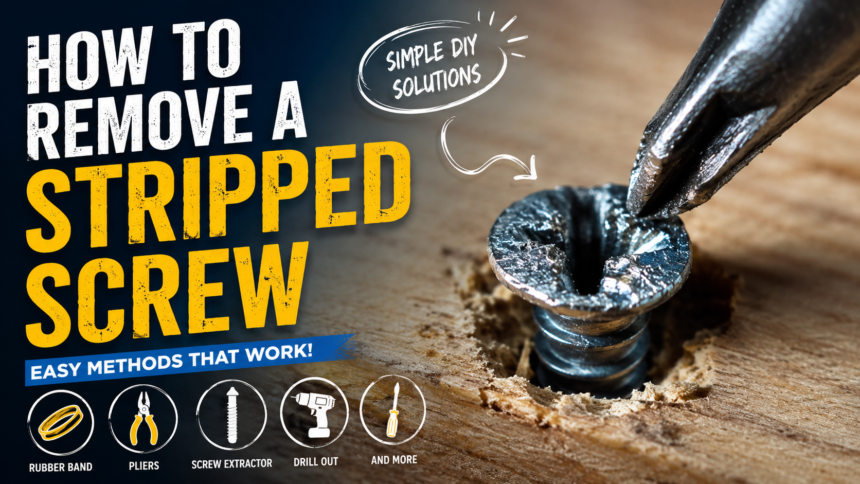
Few DIY problems are as frustrating as dealing with a stripped screw. You grab your screwdriver, apply pressure, and suddenly the screw head is worn down so badly that the tool can no longer grip it.
- What Is a Stripped Screw?
- Why Stripped Screws Are Difficult to Remove
- Gather These Tools First
- Method 1: Use a Rubber Band
- Method 2: Try a Larger Screwdriver
- Method 3: Use Pliers on the Screw Head
- Method 4: Create More Grip with Steel Wool
- Method 5: Cut a New Slot
- Method 6: Tap the Screwdriver with a Hammer
- Method 7: Use a Screw Extractor
- Method 8: Drill Out the Screw
- Method 9: Use a Left-Handed Drill Bit
- Method 10: Apply Penetrating Oil
- Common Mistakes to Avoid
- Best Method for Different Situations
- How to Prevent Stripped Screws in the Future
- Real-Life Example
- Frequently Asked Questions
- Can I remove a stripped screw without special tools?
- What is the easiest way to remove a stripped screw?
- Do screw extractors really work?
- Can a drill remove a stripped screw?
- Should I replace the screw afterward?
- Final Thoughts
If you’ve ever wondered how to remove a stripped screw, the good news is that there are several proven methods that can help. Whether you’re fixing furniture, repairing electronics, or working on a home improvement project, these techniques can save you time and prevent further damage.
This guide covers everything you need to know about how to remove a stripped screw, from simple household tricks to professional solutions.
What Is a Stripped Screw?
A stripped screw is a screw whose head has become damaged or worn down. The grooves that normally allow a screwdriver to grip the screw become smooth, making it difficult or impossible to turn.
This often happens when:
- The wrong screwdriver size is used.
- Too much force is applied.
- The screw is made from soft metal.
- The screw has been removed and reinstalled multiple times.
As many DIY experts say, “The easiest stripped screw to remove is the one you stop damaging before it’s completely worn out.”
Why Stripped Screws Are Difficult to Remove
When a screw head loses its shape, the screwdriver can no longer create enough friction to turn it.
Instead of rotating the screw, the tool simply slips inside the damaged grooves. This makes standard removal methods ineffective and often causes even more stripping.
Understanding this helps explain why most solutions focus on creating new grip between the screw and the tool.
Gather These Tools First
Before attempting how to remove a stripped screw, collect a few useful items:
- Rubber band
- Screwdriver
- Pliers
- Hammer
- Drill
- Screw extractor kit
- Steel wool
- Duct tape
- Safety glasses
You may not need all of them, but having several options available increases your chances of success.
Method 1: Use a Rubber Band
One of the simplest solutions for how to remove a stripped screw is using a rubber band.
Place a wide rubber band directly over the damaged screw head. Press the screwdriver firmly into the rubber band and slowly turn the screw.
The rubber fills the stripped gaps and creates extra grip between the screwdriver and the screw.
This method works surprisingly well for mildly damaged screws and requires no special tools.
Method 2: Try a Larger Screwdriver
Sometimes the original screwdriver is simply too small.
Switch to a slightly larger screwdriver and press down firmly while turning slowly. The larger tip may catch the remaining edges inside the screw head.
Many people are surprised to discover that this quick adjustment solves the problem immediately.
Method 3: Use Pliers on the Screw Head
If part of the screw is sticking above the surface, locking pliers can be extremely effective.
Clamp the pliers tightly around the exposed head and rotate slowly.
Think of it like opening a stubborn jar lid—the stronger the grip, the easier it becomes to break the resistance.
This technique is often the fastest answer to how to remove a stripped screw when enough of the screw is visible.
Method 4: Create More Grip with Steel Wool
A small piece of steel wool can provide additional friction.
Place the steel wool over the screw head and push the screwdriver through it before turning.
The extra material fills gaps and helps the screwdriver bite into the damaged areas.
This trick is especially useful when a rubber band is too thin to make a difference.
Method 5: Cut a New Slot
For severely stripped screws, creating a new slot can be very effective.
Using a rotary tool or hacksaw, carefully cut a straight groove across the screw head.
Once the groove is deep enough, use a flathead screwdriver to turn the screw out.
Always wear eye protection when cutting metal to avoid injury.
Method 6: Tap the Screwdriver with a Hammer
Sometimes a screwdriver slips because it cannot fully engage the damaged screw.
Place the screwdriver in the screw head and gently tap it with a hammer.
This can force the tip deeper into the metal and create enough grip to loosen the screw.
Use controlled force rather than heavy blows to avoid damaging surrounding materials.
Method 7: Use a Screw Extractor
A screw extractor is specifically designed for situations involving how to remove a stripped screw.
These tools are inexpensive and available at most hardware stores.
How to Use a Screw Extractor
- Drill a small pilot hole in the center of the screw.
- Insert the extractor into the hole.
- Turn the extractor counterclockwise.
- Continue turning until the screw backs out.
This method is one of the most reliable solutions for badly stripped screws.
Professional contractors often consider screw extractors their first choice because they work on a wide range of screw types.
Method 8: Drill Out the Screw
When all other methods fail, drilling out the screw may be necessary.
Use a drill bit slightly smaller than the screw head and carefully drill into the center.
Eventually, the head will separate from the shaft. Once the attached material is removed, the remaining screw shaft can usually be pulled out with pliers.
This should generally be considered a last-resort option.
Method 9: Use a Left-Handed Drill Bit
A left-handed drill bit rotates in the opposite direction of a standard drill bit.
As it drills into the screw, it may catch and unscrew the fastener automatically.
Many mechanics and repair professionals use this method because it combines drilling and extraction into one process.
For stubborn screws, it can save significant time.
Method 10: Apply Penetrating Oil
If rust is contributing to the problem, penetrating oil can help loosen the screw.
Apply the oil around the screw and allow it to sit for 15–30 minutes.
The lubricant seeps into small gaps and reduces friction.
After waiting, try one of the other removal methods again.
Many screws that seem impossible to remove become much easier once corrosion is addressed.
Common Mistakes to Avoid
When learning how to remove a stripped screw, avoid these common errors:
- Using excessive force.
- Choosing the wrong screwdriver size.
- Rushing the process.
- Ignoring rust or corrosion.
- Continuing to strip the screw after it starts slipping.
A useful rule is: “If the screwdriver slips twice, stop and try a different method.”
This can prevent minor damage from becoming a major problem.
Best Method for Different Situations
Lightly Stripped Screws
- Rubber band
- Steel wool
- Larger screwdriver
Moderately Stripped Screws
- Hammer tap method
- Locking pliers
- New slot method
Severely Stripped Screws
- Screw extractor
- Left-handed drill bit
- Drill-out method
Matching the method to the severity of the damage often produces the best results.
How to Prevent Stripped Screws in the Future
Preventing stripped screws is much easier than removing them.
Follow these simple tips:
- Use the correct screwdriver size.
- Apply steady pressure while turning.
- Avoid power tools when precision is needed.
- Replace damaged screws immediately.
- Use quality screws made from stronger metals.
A few seconds of care during installation can save hours of frustration later.
Real-Life Example
Imagine you’re assembling a bookshelf and one screw becomes stripped before the project is finished.
Instead of forcing the screwdriver repeatedly, place a rubber band over the screw head and try again. If that doesn’t work, switch to locking pliers if the head is exposed.
Most household stripped screws can be removed within minutes using these simple techniques.
The key is choosing the right method early rather than continuing to damage the screw.
Frequently Asked Questions
Can I remove a stripped screw without special tools?
Yes. Rubber bands, pliers, steel wool, and larger screwdrivers often work well for lightly stripped screws.
What is the easiest way to remove a stripped screw?
The rubber band method is usually the simplest and cheapest solution to try first.
Do screw extractors really work?
Yes. Quality screw extractors are highly effective and are commonly used by professionals.
Can a drill remove a stripped screw?
Absolutely. A drill can be used with a screw extractor, left-handed drill bit, or by drilling out the screw entirely.
Should I replace the screw afterward?
Yes. Once removed, replace it with a new screw to avoid future problems.
Final Thoughts
Knowing how to remove a stripped screw can save you from replacing furniture, damaging materials, or abandoning a project halfway through. Start with simple methods like a rubber band or larger screwdriver, then move to more advanced options such as pliers, screw extractors, or drilling if necessary.
Most stripped screws can be removed successfully with patience and the right technique. As the saying goes, “The right tool and a little persistence can solve almost any DIY problem.” By following these methods, you’ll be prepared the next time a stubborn stripped screw stands in your way.
Also Read: The Seattle Weekly