
A zipper is one of those small things most people never think about until it stops working. Whether it’s on a jacket, pair of jeans, backpack, suitcase, tent, or favorite hoodie, a broken zipper can instantly make an item difficult or impossible to use.
- Understanding How a Zipper Works
- Common Reasons Zippers Fail
- Tools You May Need
- How to Fix a Zipper That Won’t Stay Closed
- How to Fix a Stuck Zipper
- How to Fix a Zipper That Separates After Zipping
- How to Fix Bent Zipper Teeth
- How to Fix a Zipper Slider That Came Off
- How to Fix a Broken Zipper Pull
- How to Fix a Zipper Missing Teeth
- How to Fix a Jacket Zipper
- How to Fix a Jeans Zipper
- How to Fix a Backpack Zipper
- How to Fix a Suitcase Zipper
- How to Fix a Tent Zipper
- Metal vs. Plastic Zippers
- Preventing Future Zipper Problems
- Keep Zippers Clean
- Avoid Excessive Force
- Lubricate Occasionally
- Store Items Properly
- Don’t Overload Bags
- Signs It’s Time to Replace the Entire Zipper
- Mistakes to Avoid During Zipper Repair
- Final Thoughts
The good news is that many zipper problems can be fixed at home in just a few minutes. You don’t always need special tools, sewing skills, or expensive repairs. In fact, learning how to fix a zipper can save money and help you extend the life of your clothing and accessories.
Many people throw away perfectly good items because of a zipper issue that could have been repaired quickly. A stuck slider, separated zipper teeth, broken pull tab, or loose zipper often has a simple solution.
This guide explains how to fix a zipper step by step, covering the most common zipper problems and the best ways to repair them.
Understanding How a Zipper Works
Before learning how to fix a zipper, it helps to understand the basic parts of a zipper.
A zipper has three main components:
- The zipper teeth
- The slider
- The zipper pull
The slider is the part that moves up and down. As it travels along the zipper, it joins or separates the teeth.
Think of the slider as a traffic controller. If it becomes damaged or loose, the zipper teeth can no longer connect properly. This is why many zipper problems are actually caused by the slider rather than the teeth themselves.
As the old repair saying goes, “Most broken zippers aren’t truly broken—they’re simply out of adjustment.”
Common Reasons Zippers Fail
Several issues can cause a zipper to stop working.
Common causes include:
- Dirt and debris in the zipper track
- Bent zipper teeth
- Worn-out slider
- Broken zipper pull
- Misaligned teeth
- Missing zipper teeth
- Fabric caught in the zipper
- Excessive pressure from overstuffing bags
Identifying the cause is the first step when learning how to fix a zipper correctly.
Tools You May Need
Most zipper repairs require only a few basic household tools.
Useful items include:
- Needle-nose pliers
- Tweezers
- Small screwdriver
- Cotton swabs
- Bar soap
- Candle wax
- Graphite pencil
- Needle and thread
- Scissors
- Replacement zipper slider
You may not need all of these tools, but having them nearby makes repairs easier.
How to Fix a Zipper That Won’t Stay Closed
One of the most common zipper problems occurs when the zipper appears closed but immediately opens behind the slider.
For example, you zip up your jacket, but the zipper separates a few inches below the slider.
This issue usually means the slider has become worn out.
Step 1: Examine the Slider
Look closely at the slider.
Over time, daily use can cause it to widen slightly.
Even a tiny amount of wear can prevent the teeth from locking together properly.
Step 2: Tighten the Slider
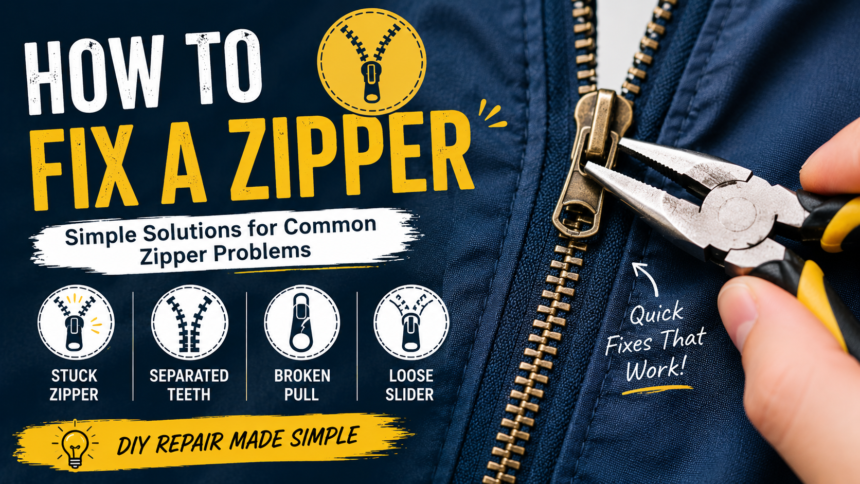
Using needle-nose pliers, gently squeeze both sides of the slider.
Apply only a small amount of pressure.
Test the zipper after each adjustment.
Many people are surprised to discover that this simple fix completely solves the problem.
Step 3: Test the Zipper
Move the slider up and down several times.
If the teeth stay connected, the repair was successful.
When people search for how to fix a zipper, this is often the exact solution they need.
How to Fix a Stuck Zipper
A stuck zipper can be incredibly frustrating.
Pulling harder often makes the problem worse.
Instead, work slowly and carefully.
Check for Fabric
The most common cause of a stuck zipper is fabric caught between the teeth.
Inspect both sides carefully.
If fabric is trapped:
- Use tweezers to loosen it
- Pull gently
- Avoid yanking the slider
Patience is important here.
Forcing the zipper can tear the material.
Lubricate the Zipper
If no fabric is trapped, lubrication may help.
Popular options include:
- Graphite pencil
- Candle wax
- Lip balm
- Soap bar
- Zipper lubricant
Apply a small amount directly to the teeth.
Move the slider slowly back and forth.
The movement helps distribute the lubricant evenly.
Often, a zipper that seemed completely stuck starts moving smoothly again.
How to Fix a Zipper That Separates After Zipping
This problem is especially common on jackets and coats.
You zip the garment closed, but moments later the zipper opens again.
Why It Happens
Usually, the slider is no longer creating enough pressure to connect the teeth properly.
Years of use gradually wear down the internal channels of the slider.
Repair Method
Use pliers to gently tighten the slider.
Focus on small adjustments.
After each adjustment, test the zipper.
The goal is to restore enough pressure for the teeth to lock together securely.
This is one of the most effective techniques for anyone learning how to fix a zipper at home.
How to Fix Bent Zipper Teeth
Bent zipper teeth can prevent smooth operation.
Even one damaged tooth can create problems throughout the zipper.
Locate the Damaged Area
Open the zipper fully.
Examine each tooth carefully.
Look for:
- Bent teeth
- Twisted teeth
- Misaligned sections
Straighten Carefully
Use pliers to gently bend damaged teeth back into place.
Work slowly.
Too much force can break the teeth completely.
After straightening, test the zipper.
Small corrections often restore normal operation.
How to Fix a Zipper Slider That Came Off
A zipper slider that falls off may seem impossible to repair.
Fortunately, it can often be reattached.
Remove the End Stop
Use pliers to carefully remove the metal stop at the top or bottom of the zipper.
This creates space for reinstalling the slider.
Reinsert the Slider
Thread both sides of the zipper into the slider evenly.
Take your time.
If one side enters higher than the other, the zipper may become crooked.
Replace the Stop
After reinstalling the slider, add a new stop.
This prevents the slider from coming off again.
How to Fix a Broken Zipper Pull
The zipper pull is the small tab used to move the slider.
When it breaks, the zipper becomes difficult to operate.
Fortunately, this is one of the easiest zipper repairs.
Temporary Solutions
You can use:
- A paper clip
- A key ring
- A small chain
- A loop of string
- Jewelry rings
Simply attach the replacement to the slider.
The zipper will function normally until you install a permanent pull.
Permanent Solutions
Replacement zipper pulls are inexpensive and widely available.
Installing one usually takes less than a minute.
How to Fix a Zipper Missing Teeth
Missing teeth create a more serious problem.
Without all the teeth present, the zipper cannot fully close.
Temporary Repair
Sew a stop above the damaged section.
This prevents the slider from reaching the missing teeth.
While it shortens the zipper slightly, it allows continued use.
Permanent Repair
A zipper with multiple missing teeth generally requires replacement.
Unfortunately, missing teeth cannot usually be repaired individually.
How to Fix a Jacket Zipper
Jackets experience frequent zipper wear.
Daily opening and closing gradually affects the slider and teeth.
Clean First
Before attempting repairs:
- Remove dirt
- Wipe away debris
- Inspect for damage
Many jacket zipper issues are caused by dirt buildup rather than actual damage.
Tighten the Slider
If the zipper separates, gently tighten the slider with pliers.
This often restores normal function immediately.
A properly adjusted slider can make an old jacket feel brand new again.
How to Fix a Jeans Zipper
Jeans zippers deal with constant pressure and movement.
As a result, they frequently develop problems.
Zipper Won’t Stay Up
If your jeans zipper keeps sliding down:
- Check for a worn slider
- Inspect the zipper teeth
- Replace damaged components
A quick temporary solution is attaching a key ring to the zipper pull and looping it around the button before fastening the waistband.
Many people use this trick successfully every day.
How to Fix a Backpack Zipper
Backpacks often carry heavy loads.
This places stress on the zipper system.
Common Backpack Zipper Issues
Typical problems include:
- Dirt accumulation
- Separated teeth
- Broken pulls
- Worn sliders
Start by cleaning the zipper thoroughly.
Then inspect the slider and teeth for visible damage.
Most backpack zipper issues can be repaired without replacing the entire bag.
How to Fix a Suitcase Zipper
Suitcase zippers endure significant strain during travel.
Overpacking is one of the biggest causes of zipper failure.
Reduce Pressure
If the suitcase is difficult to close:
- Remove some items
- Reposition bulky contents
- Try zipping again
Excess pressure can cause teeth separation and slider damage.
Inspect for Damage
Check for:
- Bent teeth
- Cracked slider
- Missing teeth
Addressing small issues early prevents larger failures during travel.
How to Fix a Tent Zipper
Tent zippers face dirt, sand, moisture, and outdoor conditions.
These elements often cause sticking.
Clean Thoroughly
Use a soft brush to remove dirt and sand.
Wipe the zipper carefully.
Apply zipper lubricant afterward.
Outdoor enthusiasts often say, “A clean zipper is a reliable zipper.”
Regular maintenance can dramatically improve performance.
Metal vs. Plastic Zippers
Understanding the type of zipper you’re repairing is important.
Metal Zippers
Metal zippers are strong and durable.
However, they can bend if excessive force is applied.
Use pliers carefully when adjusting metal teeth.
Plastic Zippers
Plastic zippers resist corrosion and are lightweight.
However, broken plastic teeth are usually harder to repair.
Knowing your zipper type helps determine the best repair method.
Preventing Future Zipper Problems
The best way to deal with zipper issues is preventing them altogether.
Simple habits can significantly extend zipper life.
Keep Zippers Clean
Dust and dirt create friction.
Regular cleaning keeps movement smooth.
Avoid Excessive Force
Never force a zipper.
If resistance occurs, identify the cause first.
Lubricate Occasionally
A small amount of wax or lubricant helps reduce wear.
Store Items Properly
Avoid crushing zippers during storage.
Excessive pressure can bend teeth and damage sliders.
Don’t Overload Bags
Heavy loads create unnecessary stress on zipper systems.
Reducing pressure helps prevent premature failure.
Signs It’s Time to Replace the Entire Zipper
Not every zipper can be repaired.
Sometimes replacement is the most practical option.
Consider replacing the zipper if:
- Several teeth are missing
- The zipper tape is torn
- The slider is cracked
- Repairs repeatedly fail
- Large sections are damaged
A new zipper often restores the item completely.
Mistakes to Avoid During Zipper Repair
People often create additional damage by making simple mistakes.
Avoid:
- Pulling too hard on a stuck zipper
- Over-tightening the slider
- Using excessive lubricant
- Bending teeth aggressively
- Ignoring early warning signs
A gentle approach usually produces the best results.
Final Thoughts
Learning how to fix a zipper is a valuable skill that can save money and extend the life of your clothing, bags, luggage, and outdoor gear. Most zipper problems are caused by simple issues such as dirt buildup, loose sliders, bent teeth, or broken pulls. These problems can often be fixed in just a few minutes using basic household tools.
Whether you’re repairing a jacket zipper, fixing a backpack, restoring a suitcase, or troubleshooting your favorite pair of jeans, understanding how to fix a zipper gives you the confidence to solve common issues without replacing the entire item. As the saying goes, “A five-minute repair can add years of life to something you already love.” With a little patience and the right technique, many zippers can be brought back to smooth, reliable operation.
Also Read: The Seattle Weekly